
Devon Rex vs Russian Blue: Coat, Care and Company Compared
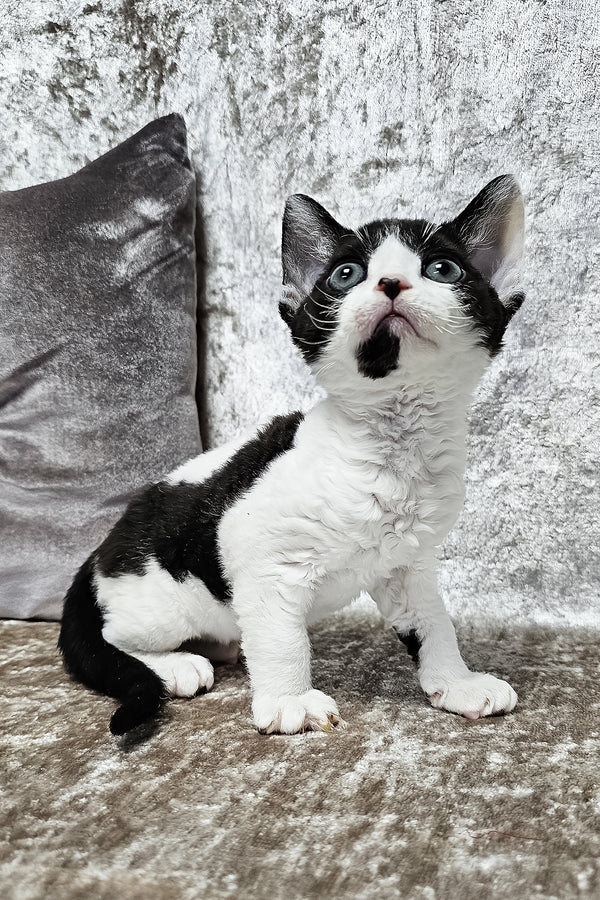
Table of Contents (7)
Few breed pairs are as different as the Devon Rex and the Russian Blue. One is a pixie-like clown that wants to be on you, on your shoulder, or in the warmest spot in the house — playful, mischievous and kitten-like into adulthood. The other is a quiet, loyal cat that chooses one person, keeps its distance from strangers, and asks for affection on its own terms. Both are short-coated, intelligent and beautiful in completely different ways. This comparison covers temperament, coat care, shedding, health screening and home fit — the things that actually decide whether a breed suits your household — without declaring a winner, because the right answer depends on how much company, noise and attention your home can offer.
Appearance: curls and big ears vs silver-blue silk
The Devon Rex is instantly recognisable: a small to medium cat with a short, soft, curly coat in many colours and patterns, huge ears, high cheekbones and an elfin, pixie-like face. It looks like a cat that is always up to something — and usually is.
The Russian Blue is just as distinctive, in the opposite direction: a medium-sized, graceful cat with a short, dense, silver-blue double coat that stands out from the body, and striking green eyes. The coat's silver tipping gives it a shimmering, almost luminous quality. The breed is often described as one of the most elegant of the short-coated breeds — a quiet cat that looks as calm as it behaves.
Adult Devon Rex cats are commonly cited at around 2.5–4.5 kg, with lifespans cited in the region of 12–15 years. Adult Russian Blues are commonly cited at around 3–6.8 kg, with lifespans cited in the region of 15–20 years. Ranges vary between sources, so treat these as a guide, not a promise — individual cats vary, and upbringing matters as much as breed.
Temperament: the clown that wants to be on you vs the loyal introvert
The Devon Rex is extremely social, playful, mischievous, intelligent and trainable — many learn fetch, tricks and leash walks — and it loves high perches and warm, sunny spots. It attaches closely to its family, often pouring its affection on one person in particular, and it keeps kitten-like energy into adulthood. It is more vocal than a Russian Blue and will meow loudly for attention. A Devon Rex is not a background pet; it is a participant in the household, and it will make sure you know it.
The Russian Blue is calm, quiet and reserved with strangers, but deeply loyal to the people it trusts. It is gentle and affectionate on its own terms, independent and low-maintenance, and it prefers a quiet, stable home. Around strangers it is usually shy, preferring to watch from a distance before deciding you are trustworthy. It is affectionate with its own people, but it asks for attention softly rather than demanding it. Where the Devon Rex announces itself, the Russian Blue earns your trust and then keeps it.
Individual cats vary, of course: temperament is a range, not a promise. But the broad pattern holds: the Devon Rex wants to be involved in everything, loudly and at close range; the Russian Blue wants a quiet, stable home and a person it can trust completely.
Are Devon Rex cats very affectionate? Are Russian Blues aloof?
Yes to the first — and the second needs a careful answer. The Devon Rex is one of the most affectionate breeds: it seeks physical contact, climbs onto laps and shoulders, and follows its people from room to room. Owners who love the breed usually love the closeness; owners who want a cat that keeps its distance often find it overwhelming.
The Russian Blue is not aloof with its own people — it bonds deeply, often most strongly with one person — but it is reserved with everyone else. It is gentle with its family and shy with visitors, and it may hide when strangers arrive, which is normal for the breed rather than a problem. So the practical question is simple: do you want a cat that is affectionate with everyone, or a cat that is devoted to you and cautious with the rest of the world? Skip a Devon Rex if you want a cat that leaves you alone — and skip a Russian Blue if you want a cat that greets every visitor at the door.
Grooming and shedding: both low shedders, different coats
Compared with long-haired breeds, both of these are easy — but their coats need different handling.
The Devon Rex's short, soft, curly coat sheds minimally and is low maintenance in volume, but it is delicate: handle it gently and do not rub hard when grooming. Devon Rex cats also feel the cold more than most cats, so a warm spot — and in a cold house, a light cat jumper, which some owners use — is worth providing.
The Russian Blue's short, dense double coat is silvery blue-grey with a sheen. In spite of the dense coat it does not shed much, but it needs a little more brushing than the Devon Rex: weekly brushing is usually enough, with more attention during seasonal shedding when the dense undercoat loosens. Apart from that, routine claw trims and keeping the eyes and ears clean are all that is needed for either breed.
How do the two compare on maintenance? Sources disagree: one comparison rates both as low maintenance, while another rates the Devon Rex low and the Russian Blue high. On shedding, most sources say both shed minimally, though one rates the Russian Blue's shedding as moderate rather than minimal. The majority position is that both are low shedders, with the Russian Blue needing slightly more brushing because of its dense double coat. Neither coat is the deciding factor between the two. The real difference is not grooming but temperament: company, noise and attention.
Neither breed is hypoallergenic, and neither should be presented as one. Both shed, and both produce the proteins that trigger cat allergies; a short or curly coat is not the same as being allergy-free.
Health and screening to ask about
Responsible breeders screen breeding cats for the hereditary conditions relevant to each breed, and the questions to ask differ.
For the Devon Rex, one comparison source lists hypertrophic cardiomyopathy (HCM) — the most common heart disease in cats, diagnosed by echocardiogram performed by a veterinary cardiologist — as a condition the breed has a high predisposition to, and hereditary hair loss or coat thinning is also noted for the breed. For the Russian Blue, sources list fewer predispositions, and the breed is generally considered a healthy one. The same good practice applies to both: ask the breeder what screening they do and ask to see the actual results for the actual parents.
No screening programme makes any cat "risk-free" — it reduces risk and shows the breeder is breeding carefully. Our guide to choosing a responsible breeder lists the questions to ask.
Living with families and other pets
Both breeds can live well with respectful children and other pets when introduced properly — but the fit differs.
The Devon Rex thrives in an active, social household. It is generally good with children who enjoy an interactive, playful cat, and it often gets on well with other cats and cat-friendly dogs, especially if there is another cat to keep it company. It suits a flat well, as long as it has high perches, warm spots and people to play with.
The Russian Blue thrives in a quiet, stable environment. It is gentle with children, but it prefers calm, predictable households and is not ideal for loud, chaotic homes. It generally gets on well with other quiet cats, introduced gradually, and it often does best as the only cat or with one calm companion.
Both breeds suit indoor living, with secured outdoor access if available. Their intelligence makes both of them good candidates for harness training and supervised outdoor time.
Which one fits you?
- Choose a Devon Rex if you want a playful, mischievous, highly social cat that wants to be on you, follows you everywhere, plays hard and keeps you company all day — and you have the time and energy to match it.
- Choose a Russian Blue if you want a quiet, gentle, devoted cat that bonds deeply with its people, is content with a calm routine and a daily play session, and you prefer a peaceful house to a chatty one.
Still deciding? Read the full breed guides for the Devon Rex (https://elitecatbreeders.com/devon-rex-kittens/) and Russian Blue (https://elitecatbreeders.com/russian-blue-kittens/) — and if you are considering a kitten, start with an enquiry and an honest conversation about your household, your working hours and how much company you actually want. The right match matters more than the fastest one.
Planning for Your Kitten or Need Species Advice?
Explore our available kitten profiles or try our Cat Food & Vaccination Planners.
Related Purebred Collections, Guides & Free Care Calculators
View live profiles, lineage & European handover terms
View live profiles, lineage & European handover terms
Reader Questions & Article Discussion
Ask a question about temperament, grooming, home preparation, or share your thoughts with fellow European cat families.