
Bengal vs Siberian: Two Very Different Active Breeds Compared
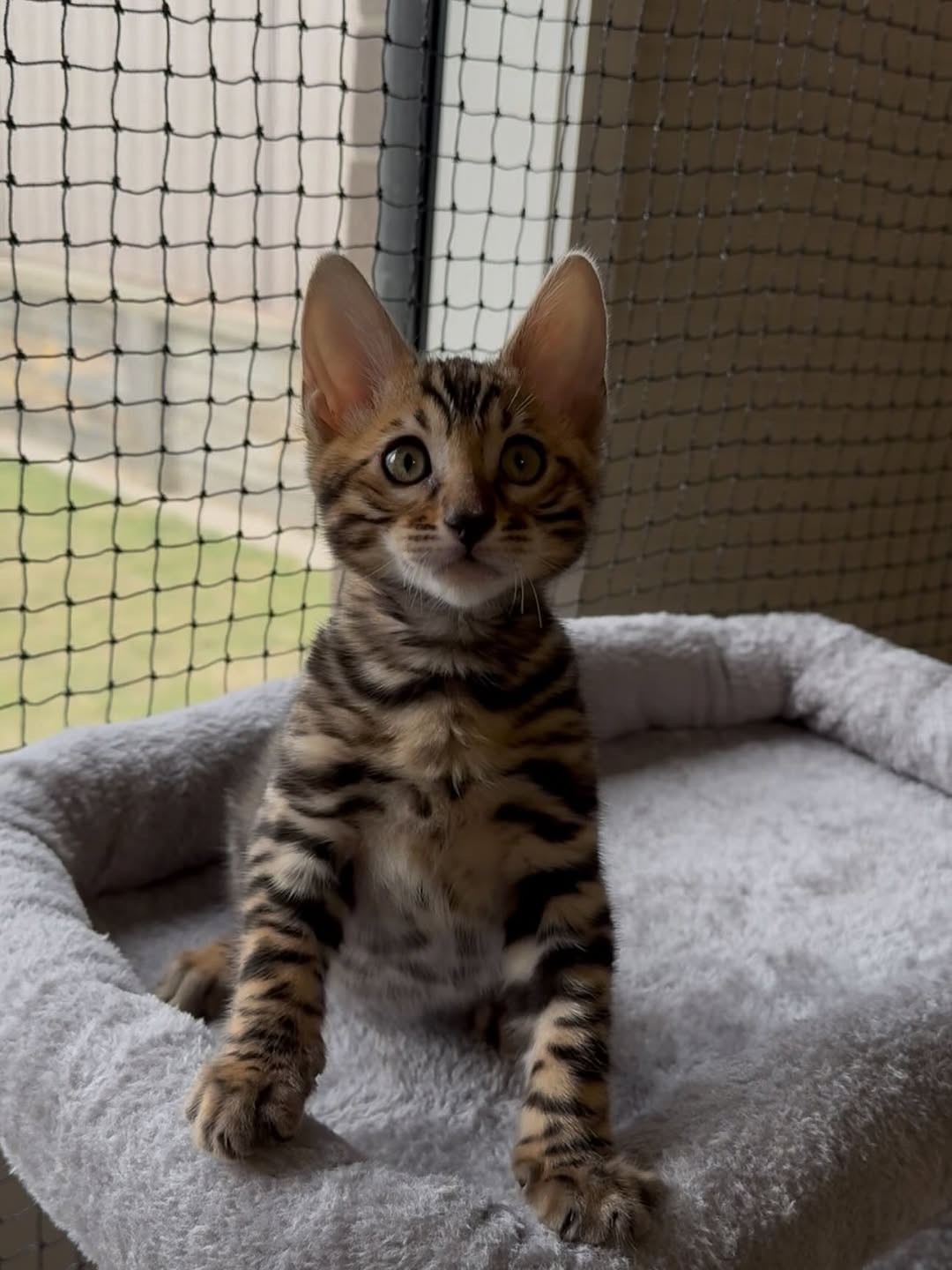
Table of Contents (7)
If you want an active cat, the Bengal and the Siberian both qualify — but they spend that energy in very different ways. The Bengal is a high-energy athlete that wants to climb, play and be involved in everything you do. The Siberian is a big, gentle forest cat that is playful and curious, yet far calmer and more content to keep you company. This comparison covers temperament, energy, grooming, size and home fit, so you can judge which one matches the time and attention your household can actually give.
Appearance: the wild-look athlete vs the big forest cat
The Bengal looks like a small wild cat. It has a short, dense, pelt-like coat with rosettes or marbling, a muscular, athletic build and a confident, alert expression. The breed was developed from crosses between domestic cats and the Asian leopard cat, and that heritage shows in its look — and in its energy.
The Siberian looks like a cat built for a Russian winter. It is a large, sturdy, natural breed that developed in the cold forests of Russia, with a dense triple coat, a broad chest and a powerful build. Its coat has a soft, downy undercoat, a middle layer and longer, water-resistant guard hairs. Where the Bengal looks sleek and ready to sprint, the Siberian looks solid and ready for snow.
Adult Bengals are commonly cited at around 4.5–7 kg for males and 3.6–5.4 kg for females, with lifespans cited in the region of 12–16 years. Adult Siberians are larger: males commonly around 5.4–8 kg and females around 3.6–5.4 kg, with lifespans cited in the region of 12–15 years. Ranges vary between sources, so treat these as a guide, not a promise — individual cats vary, and upbringing matters as much as breed.
Temperament: demanding playmate vs gentle companion
The Bengal is very high energy, athletic, curious and demanding. Bengals are intelligent and trainable — many learn fetch, tricks and harness walks — and they love to climb and jump. They are vocal, and many are curious about water. A Bengal wants to be part of whatever you are doing, and it will tell you when it is bored.
The Siberian is gentle, affectionate and loyal, often described as dog-like in its devotion to its people. It is calm and easy-going but playful and exploratory, sociable without being clingy, and generally good with children and other pets. Most sources describe Siberians as affectionate and people-seeking, though one source calls them more independent and reserved than Bengals. The majority position is the affectionate one — a Siberian that follows you around the house, but does not demand your attention every minute.
Individual cats vary, of course. But the broad pattern holds: the Bengal wants your time, your games and your attention, loudly; the Siberian wants your company, calmly.
Which is more active, and how much play does each need?
The Bengal is the more active of the two — and by most comparisons, one of the most active breeds in this queue. It needs daily interactive play in two or three sessions: wand toys, climbing shelves, puzzle feeders and training games that actually tire it out. How much is enough? Sources disagree widely, suggesting anything from around half an hour to up to two hours of interactive play a day. There is no single settled figure, so the honest answer is: plan for a real daily commitment, in several sessions, and watch the cat — a Bengal that is getting enough play is settled in the evenings; a bored Bengal is destructive, and may bite and scratch when under-exercised.
The Siberian is moderate to high energy, but calmer than the Bengal. One source suggests around 30 minutes of play a day; more importantly, Siberians entertain themselves more readily and adapt better to smaller homes. They still need daily play and things to climb and explore, but they do not demand constant entertainment the way a Bengal does.
So the practical question is simple: can someone at home give a cat real, focused play every day? If the answer is no, the Bengal will be unhappy — and so will your furniture.
Grooming and shedding: the headline difference
This is where the two breeds part company most clearly.
The Bengal's short, dense, pelt-like coat is low shedding and minimal work: brushing about once a week is usually enough to remove loose hair and keep it glossy. For a busy household, the Bengal's coat is one of its easiest features.
The Siberian's dense triple coat is the opposite. It sheds heavily, and the coat blows — sheds in bulk — twice a year, heaviest in spring. How often should you brush it? Sources disagree: some guides say two or three times a week year-round, daily during a coat blow; others say weekly brushing is enough outside shedding season, stepping up to daily when the coat is blowing. The safe plan is to brush a few times a week, daily when the coat is blowing, and to expect a lot of loose hair in spring whatever routine you follow.
Neither breed is hypoallergenic, and neither should be presented as one. One source calls the Bengal hypoallergenic or low-shedding, and another says Siberians cause fewer reactions thanks to lower levels of the Fel d1 protein. Neither claim is settled, and no cat breed is allergy-free. Both breeds shed, and both produce the proteins that trigger cat allergies.
Health and screening to ask about
Responsible breeders screen breeding cats for the hereditary conditions relevant to each breed, and the questions to ask differ by breed. Hypertrophic cardiomyopathy (HCM), the most common heart disease in cats, is diagnosed by echocardiogram performed by a veterinary cardiologist, and it is worth asking any breeder what screening they do and asking to see the actual results for the actual parents.
No screening programme makes any cat "risk-free" — it reduces risk and shows the breeder is breeding carefully. Our guide to choosing a responsible breeder lists the questions to ask.
Living with families and other pets
Both breeds can live well with respectful children and other pets when introduced properly — but the fit differs.
The Bengal thrives in an active household with people who enjoy an interactive, playful cat. It is generally good with children who like a cat that plays hard, and it often gets on well with other cats and cat-friendly dogs, especially if there is another cat to keep it company. It does less well in a quiet home where nobody has time to play.
The Siberian thrives in a family home too, and is often the easier fit: gentle with children, sociable with other pets, and adaptable to a flat as long as it has climbing space and daily play. It is the better choice for a household that wants an active, affectionate cat without the Bengal's intensity.
Both breeds suit indoor living, with secured outdoor access if available. Their intelligence makes both of them good candidates for harness training and supervised outdoor time.
Which one fits you?
- Choose a Bengal if you want a strikingly athletic, intelligent cat that climbs, plays hard, learns tricks and keeps you company all day — and you have the time and energy to match it, every day.
- Choose a Siberian if you want a big, gentle, affectionate cat that is playful without being demanding, copes well with family life, and you can live with heavy seasonal shedding and regular brushing.
Skip a Bengal if no one at home can give it real daily play — and skip a Siberian if heavy seasonal shedding is a deal-breaker.
Still deciding? Read the full breed guides for the Bengal (https://elitecatbreeders.com/bengalscatspage/) and Siberian (https://elitecatbreeders.com/siberiancatsbreedpage/) — and if you are considering a kitten, start with an enquiry and an honest conversation about your household, your working hours and how much play you can actually give. The right match matters more than the fastest one.
Planning for Your Kitten or Need Species Advice?
Explore our available kitten profiles or try our Cat Food & Vaccination Planners.
Related Purebred Collections, Guides & Free Care Calculators
View live profiles, lineage & European handover terms
View live profiles, lineage & European handover terms
Reader Questions & Article Discussion
Ask a question about temperament, grooming, home preparation, or share your thoughts with fellow European cat families.