
Both the Persian and the British Shorthair are famous for the same thing: a calm, dignified presence and a coat you want to touch. Spend a week living with each, though, and the differences are hard to miss. One is a long-coated cat that asks for daily grooming and a quiet corner of the house; the other is a sturdy, low-drama companion that is happy with weekly brushing and the everyday noise of family life. This comparison covers appearance, temperament, energy, grooming, health screening and daily care — the things that actually decide whether a breed fits your home — without declaring a winner, because the right answer depends on your household and how much grooming time you honestly have.
Size and build
The Persian is a medium-to-large cat with a cobby, low-slung body, short legs, a broad chest and a large round head. The breed standard used by registries including the CFA, TICA, GCCF and FIFe describes a cat with a short, flat face, a short nose, large round eyes and small ears set low on the head. The coat is long, thick and flowing, and it comes in a very wide range of colours and patterns. Adult Persians commonly weigh around 3–5.5 kg, with males usually heavier than females.
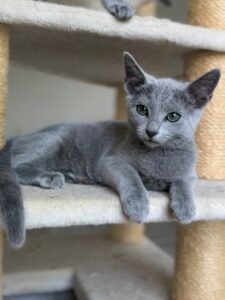
The British Shorthair is built along similar lines — compact, heavily boned, broad-chested, with a round head and full cheeks — but the impression is different: a sturdy, teddy-bear cat with a short, dense coat that stands away from the body. The British Blue, with its copper or gold eyes, is the most recognised variety, though registries recognise well over a hundred colour and pattern combinations. Males commonly weigh 5–8 kg, females somewhat less, and the breed matures slowly, often not reaching full size until three to five years of age.
In short, both breeds are calm, round-faced cats with impressive coats. The Persian’s coat is long and needs daily work; the British Shorthair’s is short, dense and plush, and needs far less.
Temperament: the quiet lap cat and the steady companion
The Persian is one of the quietest, gentlest breeds in the pedigree world. The CFA describes the breed as sweet, quiet and affectionate, and TICA describes Persians as calm cats that enjoy a serene environment and a regular routine. A Persian typically chooses a favourite spot — often a lap, a sunny windowsill or a soft bed — and stays there, content to watch the household go by. Persians rarely demand attention loudly; they ask for it with a soft look and a slow blink, and they are happiest in a peaceful home without constant commotion.
The British Shorthair is calm in a different, more robust way. It is even-tempered, quietly devoted and dignified rather than demanding. Most British Shorthairs prefer to sit near you rather than on you, showing affection on their own schedule, and they communicate in soft chirps and trills rather than loud meows. A British Shorthair tolerates the normal noise and comings and goings of a busy household without drama, and it is genuinely content to be left alone through a working day.
Individual cats vary, of course: temperament is a range, not a promise, and upbringing matters as much as breed. But the broad pattern holds: the Persian wants a quiet home and a lap; the British Shorthair wants company on its own terms and copes well with a busier one.
Energy and enrichment
Neither breed is hyperactive, and neither needs a house full of climbing structures — but their play styles differ.
The Persian is a low-energy cat. Short, gentle play sessions — a feather wand, a soft toy, a few minutes of attention — are usually enough, and the breed is famously content to spend long hours resting. Persians are not great jumpers and prefer ground-level comfort: a warm bed, a low perch and a sunny spot matter more than a tall cat tree.
The British Shorthair is moderately active: it enjoys a daily interactive play session, a sturdy scratching post and a comfortable perch near the family’s activity. It is not a great leaper either, but it is more inclined to join in household life than a Persian, following its people from room to room and settling nearby.
Both breeds suit indoor living, with secured outdoor access if available. Their trusting, home-centred natures make them poor candidates for free roaming, and a Persian’s long coat picks up dirt and tangles quickly outdoors.
Grooming: the biggest difference between these two breeds
This is where the choice is usually made. The Persian’s long coat needs daily grooming — a thorough brush or comb every day to prevent mats and tangles, plus regular attention to the eyes, which tend to water, and to the area around the face. The CFA advises that the coat should be combed daily and that many Persian owners also bathe their cat regularly to keep the coat clean and manageable. A Persian that is not groomed daily will mat, and matted fur is painful and can lead to skin problems. If you cannot commit to a daily grooming routine, or to a professional groomer on a regular schedule, a Persian is not the right choice.
The British Shorthair’s dense double coat is far less demanding: weekly brushing is usually enough to remove loose hair and keep it in condition, with more attention during seasonal shedding. Apart from that, routine claw trims and keeping the eyes and ears clean are all that is needed.
So the practical question is simple: do you want grooming to be a daily ritual you enjoy, or a weekly chore you barely notice? Answer that honestly and the breed choice mostly makes itself.
Health and screening to ask about
Responsible breeders screen breeding cats for the hereditary conditions relevant to each breed, and the questions to ask differ.
For the Persian, ask about polycystic kidney disease (PKD) — a hereditary condition in which cysts develop in the kidneys, and one for which a reliable DNA test exists; responsible breeders test their breeding cats. Ask too about hypertrophic cardiomyopathy (HCM), the most common heart disease in cats, diagnosed by echocardiogram performed by a veterinary cardiologist. Persians are also a brachycephalic breed, meaning a shortened, flat face: this can bring breathing difficulties and a tendency to watery eyes, so ask the breeder about the parents’ breathing and eye health, and be prepared for daily eye cleaning as part of routine care.
For the British Shorthair, ask about the same two conditions: HCM, and PKD, which entered the breed’s gene pool through historical Persian outcrossing and for which the same DNA test is available. The breed also carries a strong predisposition to obesity: a slow metabolism, sedentary habits and a good appetite mean measured meals and regular play are not optional extras.
No screening programme makes any cat “risk-free” — it reduces risk and shows the breeder is breeding carefully. Always ask to see the actual results for the actual parents (our guide to choosing a responsible breeder lists the questions to ask).
Living with families and other pets
Both breeds are generally good with respectful children and can live with other cats and cat-friendly dogs when introduced properly — but the fit differs.
The Persian does best in a calm, predictable household. It is gentle with children who are old enough to be gentle in return, and it usually gets on well with other quiet cats, but a loud, high-energy home can leave a Persian stressed and withdrawn. It is a cat that rewards a household that respects its pace.
The British Shorthair’s robustness and steady temper often suit busy family homes, including homes with older children. It tolerates a normal household’s noise and comings and goings without drama, and it is content to be left alone through a working day. It is usually accepting of other pets, provided introductions are done gradually.
Both breeds should be indoor cats or have secured outdoor access, and both reward a household that respects their pace rather than forcing affection on them.
Which one fits you?
- Choose a Persian if you want a quiet, gentle lap cat in a calm home, and you genuinely enjoy daily grooming as part of your routine — brushing, eye cleaning and coat care are a daily commitment, not an occasional chore.
- Choose a British Shorthair if you want a sturdy, calm, quietly affectionate companion that is steady with the whole household, copes well with a busy home and time alone, and you prefer grooming to be a weekly job rather than a daily one.
Still deciding? Read the full breed guides for the Persian and British Shorthair — and if you are considering a kitten, start with an enquiry and an honest conversation about your household and your grooming routine. The right match matters more than the fastest one.