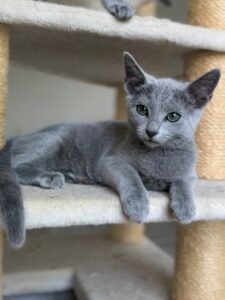

At first glance, a Siberian and a Norwegian Forest Cat can look like the same cat: big, long-coated forest breeds with a mane, tufted ears and a bushy tail. Both are hardy northern breeds, both are slow to mature, and both are known for being friendly, intelligent and good with families. Look closer, though, and the differences are clear — in the shape of the head, the profile of the nose, the texture of the coat and, most of all, in character.
This guide explains how to tell them apart, what each breed is like to live with, and how to decide which one fits your home, using breed standards from FIFe, TICA, the CFA and the GCCF and general veterinary guidance. Neither breed is better than the other: they suit different homes.
At a glance
Both breeds come from the forests of the far north, and both were shaped by cold winters — but in different countries and in different ways.
- Siberian: Russia’s forest cat; medium-large and stocky; rounded head with a slightly arched profile; green or gold eyes; dense, water-resistant triple coat; typically 4.5–9 kg.
- Norwegian Forest Cat: Norway’s forest cat; large and long-bodied; triangular head with a straight profile; almond eyes, often green or gold; semi-long double coat, thicker in winter, with a ruff and tufted paws; typically 4.5–9 kg.
- Both: slow to mature (three to five years), heavy shedders in spring, keen climbers, friendly and intelligent.
- Siberian: more people-oriented and playful, often described as dog-like.
- Norwegian Forest Cat: more independent, happy to entertain itself on a high perch.
To see each breed in more detail, visit our pages for Siberian cats and Norwegian Forest kittens.
How to tell them apart
The head is the quickest clue. A Siberian has a broad, rounded head with full cheeks, a rounded forehead and a short, full muzzle, and its profile has a gentle curve. A Norwegian Forest Cat has a triangular head — the standard describes an even triangle from the ears to the chin — with a straight profile from forehead to the tip of the nose, a longer muzzle and large ears set wide apart. Its eyes are almond-shaped and set at a slight slant, while the Siberian’s are rounder.
The coat gives a second clue. The Siberian has a triple coat — guard hairs, awn hairs and a dense undercoat — that is slightly shorter on the shoulders and longer around the neck, chest and back legs, and it sheds water well. The Norwegian Forest Cat has a double coat with a glossy, water-resistant top coat and a woolly undercoat; in winter it grows a full ruff around the neck, a mane and extra fur on the back legs. In body shape, the Norwegian is longer and more rectangular, with long back legs that make the hindquarters sit slightly higher than the shoulders, while the Siberian is more compact and rounded. Temperament is a softer clue: a Siberian is more likely to greet you at the door and follow you around, while a Norwegian is more likely to be found surveying the room from the top of a wardrobe. Kittens and young cats are the hardest to tell apart, and a pedigree and registration documents are the reliable way to confirm a cat’s breed.
Temperament: the companion and the explorer
The Siberian is the more people-focused of the two. It is affectionate, playful and curious, often following its owners from room to room, joining in games and learning household routines. Many Siberians are chatty, communicating with chirps and trills rather than loud meows, and some enjoy playing with water. They usually get on well with children and with calm dogs, and they tend to stay playful well into adulthood.
The Norwegian Forest Cat is friendly but more independent. It loves people, but on its own terms: it will come for a fuss, settle nearby and then go off to climb or watch the world from a height. It is confident and sure-footed, with strong climbing and hunting instincts, and it is patient with children. Both breeds are intelligent and need things to do, and neither is a classic lap cat — both prefer to be near you rather than held for long.
Care: coats, climbing and play
Both coats need a weekly brush, and both shed heavily in spring when the winter coat comes out, when two or three sessions a week are sensible. The Siberian’s dense coat can mat under the legs and behind the ears, so those areas deserve attention. The Norwegian’s glossier coat tangles less, but the winter ruff still needs a regular comb-through. The ordinary routine matters too: clean litter, fresh water, dental care and nail checks.
Both breeds are active and need height. A tall, sturdy cat tree, a few shelves and a scratching post are close to essential, and both enjoy wand toys and puzzle feeders. Siberians generally want more interactive play with their owners; Norwegians are often happy to climb and explore on their own. Both are large cats with a healthy appetite, so measure meals and weigh the cat regularly. Both breeds were built for harsh climates, but at home the sensible default is an indoor life with enrichment, or supervised outdoor access in a secure garden or enclosure — both are capable roamers, so identification is important if they go out.
Health and lifespan
Both breeds typically live from 12 to 16 years, and both are slow to mature, reaching their full size and coat at three to five years old. The main shared health concern is hypertrophic cardiomyopathy, a heart condition that affects a number of pedigree breeds; responsible breeding programmes screen breeding cats, and prospective owners should ask what screening the parents have had. Norwegian Forest Cats can also carry glycogen storage disease type IV, an inherited condition for which a DNA test exists — ask whether the parents were tested. Siberians are sometimes said to produce less of the Fel d 1 protein, but no cat is hypoallergenic, levels vary between individual cats, and anyone with allergies should spend time with the breed before deciding.
As with any cat, vaccinations, parasite control and routine veterinary checks are the foundation of a long, healthy life. Ask for the kitten’s written veterinary record, the parents’ screening results where relevant, and a pedigree or registration document if the kitten is described as a pedigree of a named breed.
Which one suits your home?
Think about your household honestly, and the answer usually follows:
- Choose a Siberian if you want an affectionate, playful cat that joins in family life, talks to you and wants to be involved.
- Choose a Norwegian Forest Cat if you want a confident, independent cat that is happy in company or on its own, and you can offer height and climbing space.
- Either breed suits a family with older children, a home with a tall cat tree, or an owner who enjoys an active, intelligent cat.
- Think again about a Siberian if you want a cat that is content to be left alone for long stretches without attention.
- Think again about a Norwegian Forest Cat if your home is small with no climbing space, or you want a cat that stays close to you all day.
Questions worth asking any breeder
Whichever breed you lean towards, the same checks apply. Ask whether the kittens are raised in the home and handled daily, at what age they go to their new homes, which vaccinations and identification the kitten will have, and what written records come with it. For a Norwegian Forest Cat, ask about glycogen storage disease type IV testing; for a Siberian, ask about heart screening. Our guide to how to choose a responsible cat breeder sets out twelve questions worth asking before you reserve a kitten, and they are a good checklist for either breed.
The bottom line
The Siberian and the Norwegian Forest Cat share a forest heritage, a big frame and a thick coat, but they are different cats. The Siberian is the companion: playful, talkative and involved. The Norwegian Forest Cat is the explorer: confident, independent and happiest with somewhere high to sit. Learn to read the head shape and the coat, and choose the temperament that fits the home you actually have.