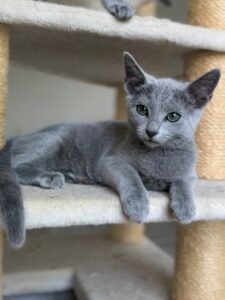

The Siamese is not a cat that keeps itself to itself. It is a talkative, people-focused companion that follows its owner from room to room, joins every conversation, greets visitors at the door and has a firm opinion about mealtimes. People who love the breed usually love exactly this: a cat that behaves more like a companion than a pet. People who want a quiet, independent cat are often surprised by just how much company a Siamese expects. This guide covers the Siamese personality honestly — the voice, the social needs, the intelligence — and the practical care that goes with it: grooming, feeding, play and the health screening to ask a breeder about, so you can decide whether this famously vocal breed fits your home.
The breed in brief
The Siamese is one of the oldest and most recognisable pedigree breeds, originating in Thailand (formerly Siam) and kept for centuries before arriving in Europe and North America in the late 1800s. It is a medium-sized cat built for elegance: long, slender and fine-boned, with a wedge-shaped head, very large ears, a long neck and legs, and striking blue almond-shaped eyes. The coat is short, fine and close-lying, in the classic pointed pattern — a paler body with darker colour on the ears, face, legs and tail. Adult Siamese commonly weigh around 2.5–5.5 kg, with males usually heavier than females.
The breed is recognised by all the major registries, including the CFA, TICA, the GCCF and FIFe. The CFA describes the Siamese as one of the most intelligent of all cats, and TICA describes the breed as affectionate, social and demanding of attention. Those two words — intelligent and demanding — explain most of what living with a Siamese is like.
Personality: a cat that talks back
The defining feature of the Siamese is its voice. Siamese cats are among the most vocal of all breeds, and their voice is famously distinctive: loud, low-pitched and insistent. A Siamese comments on meals, greets you when you come home, answers when you speak to it, and protests loudly when it feels ignored or when dinner is late. Owners often describe holding real back-and-forth conversations with their cat. For people who enjoy a cat that talks back, this is the breed’s greatest charm. For a household that values quiet — a home office full of video calls, a flat with thin walls, a family that goes to bed early — it is the first thing to think carefully about, because the voice is not something you can train out of a Siamese.
The second defining feature is how social the breed is. A Siamese wants to be with its people: on a lap, on a shoulder, in the middle of whatever you are doing. It follows its owner around the house, supervises household tasks, and prefers to sleep on or beside its person. This is a breed that forms a strong bond with its family and can become distressed when left alone for long hours. A Siamese left on its own all day, every day, is likely to become vocal, destructive or withdrawn — not out of spite, but out of loneliness. A home where someone is around for much of the day suits this breed far better than a home that is empty from morning to night, and many Siamese do well with a second cat for company, ideally another Siamese or a similarly social breed.
The third feature is intelligence. Siamese cats learn quickly: they work out how doors and cupboards open, they learn routines, and many enjoy learning tricks and walking on a lead. That intelligence is a joy when channelled into play and training — and a nuisance when it is not, because a bored Siamese will find its own entertainment, usually involving your belongings.
Individual cats vary, of course: personality is a range, not a promise, and upbringing matters as much as breed. But the broad pattern holds: the Siamese is vocal, social and clever, and it needs an owner who enjoys all three.
Grooming: the easy part
If the Siamese personality is demanding, its coat is the opposite. The short, fine coat needs very little work — an occasional gentle brush to remove loose hair is usually enough, and the breed sheds lightly. A weekly brush, a routine claw trim every couple of weeks, and regular checks of the ears and teeth cover the grooming routine. There is no daily brushing schedule, no matting to fight and no bathing routine to maintain.
Dental care deserves more attention than coat care with this breed. Siamese cats are prone to dental disease, so regular dental checks at the vet and home dental care — brushing the teeth with a cat toothpaste if the cat tolerates it, or dental diets and chews recommended by your vet — matter throughout the cat’s life.
Feeding and weight
Siamese cats are naturally slender, and they tend to stay that way with sensible feeding. Feed a good-quality complete cat food in measured amounts, following the feeding guide for the cat’s weight and age, and keep treats small. Fresh water should always be available. Because the Siamese is an active, playful breed, it usually burns off what it eats — but a Siamese kept indoors with little play can still gain weight, so weigh your cat regularly and ask your vet whether its weight is right. You should be able to feel the ribs easily under a thin layer of fat.
Siamese cats can be fussy eaters, and some are sensitive to sudden food changes — change foods gradually over a week or so, and see a vet if a cat refuses food for more than a day.
Play, enrichment and the daily routine
A Siamese needs mental stimulation and company every day — this is the core of Siamese care, more than grooming or feeding. Puzzle feeders, interactive play sessions, training games and simple conversation all help. The breed often enjoys learning tricks, playing fetch, and walking on a lead in a safe area. Short, frequent play sessions through the day suit the Siamese better than one long session, because this is a cat that wants to be involved little and often.
What a Siamese needs most, though, is a person. Interactive toys help, but they do not replace company. If your household is out all day, think honestly about whether a Siamese is the right choice, or whether a second cat would make it work. A lonely Siamese is an unhappy Siamese, and the signs — constant crying, over-grooming, destructive behaviour — are the cat telling you something is missing.
The Siamese is an indoor cat by temperament as much as by safety: its confidence, curiosity and trust in people make it a poor candidate for free roaming. Secured outdoor access, such as a cat-proofed balcony or garden, or lead walks, can give it fresh air and new smells without the risks of roaming.
Health and screening to ask about
Responsible breeders screen breeding cats for the hereditary conditions relevant to the breed, and the questions to ask differ by breed.
For the Siamese, ask about hypertrophic cardiomyopathy (HCM) — the most common heart disease in cats, diagnosed by echocardiogram performed by a veterinary cardiologist — and about progressive retinal atrophy (PRA), an inherited eye condition for which a DNA test exists in some lines. Ask also about dental health, given the breed’s tendency toward dental disease.
No screening programme makes any cat “risk-free” — it reduces risk and shows the breeder is breeding carefully. Always ask to see the actual results for the actual parents (our guide to choosing a responsible breeder lists the questions to ask).
Siamese cats can also be prone to respiratory sensitivity, and their fine coat and slender build mean they feel the cold more than heavier breeds — a warm sleeping spot away from draughts matters, especially in winter.
Living with families and other pets
The Siamese usually does well with families, provided someone is home for much of the day. It is generally excellent with children who treat it gently, and it often enjoys the company of another cat — company is what it wants most. It can live with cat-friendly dogs when introduced properly, but introductions should be gradual and supervised. A home where everyone is out all day is a poor fit for this breed, and a very quiet household that wants a cat to be seen and not heard will find the Siamese a frustrating choice.
What the Siamese gives back is unusual: a cat that greets you, talks to you, plays with you and clearly prefers your company to being alone. Owners often describe the breed as dog-like in its loyalty, and that is not far from the truth.
Is a Siamese right for you?
- Choose a Siamese if you want a talkative, deeply social companion that will follow you, talk to you and sit with you — and someone is home for much of the day to give it the company it needs.
- Think again if you want a quiet cat, you are away from home for long hours every day, or you want a pet that is happy to be left to its own devices.
Still deciding? Read the full breed guide for the Siamese — and if you are considering a kitten, start with an enquiry and an honest conversation about your household, your working hours and how much company you can give every day. The right match matters more than the fastest one. If you have general questions about bringing a kitten home, our kitten FAQ covers the basics.