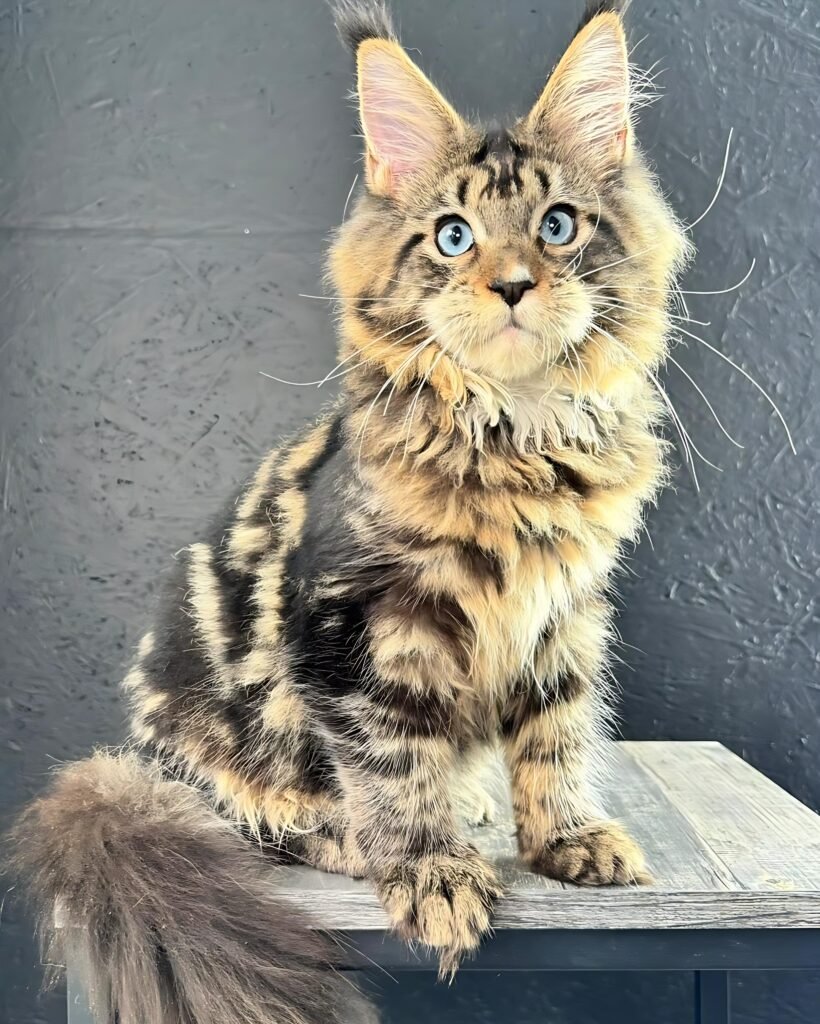
The Maine Coon is one of the largest domestic cat breeds, and its coat is a big part of the appeal: long, shaggy and water-resistant, with a ruff around the neck, tufts between the toes and a plumed tail. That coat is also the breed’s main grooming commitment. The good news is that a Maine Coon’s coat is easier to look after than it looks. It is long but not as fine or as tangle-prone as a Persian’s, and a short, regular routine prevents almost every grooming problem this breed gets — mats, hairballs and a stressed cat at bath time.
What a Maine Coon coat is actually like
A Maine Coon has a double coat: a soft, dense undercoat and longer, coarser guard hairs on top. The coat is heavier around the neck, chest and hindquarters, and it changes with the seasons — thicker in winter, lighter in summer. The breed standards of The International Cat Association (TICA) and the Cat Fanciers’ Association (CFA) describe a shaggy coat that is shorter on the shoulders and longer on the stomach and britches, with ear tufts and toe tufts.
The coat’s job is protection. It developed for cold, wet New England winters, so it sheds water and insulates well. That same density is why grooming matters: loose undercoat that is not brushed out works its way into tangles, and tangles left alone become mats — tight clumps of felted fur that pull on the skin, trap moisture and can hide irritation or sores underneath.
The weekly brushing routine
For most Maine Coons, brushing two or three times a week is enough. During the heavy seasonal sheds in spring and autumn, when the coat is changing, most cats need a little more — every other day, or daily for a few weeks if the loose fur is coming out in handfuls. Short, calm sessions beat long ones: five to ten minutes, ending while the cat is still relaxed, builds a habit a cat will tolerate for years.
You need two tools, and they do different jobs:
- A stainless steel comb is the main tool. Work in sections, combing down to the skin — not just over the top of the coat. If the comb glides through, the section is clear. If it snags, there is loose undercoat or the start of a tangle.
- A slicker brush is useful for removing loose surface fur, especially during shedding season. Use it gently; pressing hard scratches the skin and teaches the cat to dislike grooming.
A practical order: start with the comb on the back and sides, then the chest ruff, then the belly and the insides of the hind legs, finishing with the tail. The places mats form first are the places owners skip — behind the ears, under the armpits, around the collar area, the belly, and between the hind legs. Check those spots every session, even when the rest of the coat looks fine.
Start grooming young. A kitten that is brushed briefly and rewarded a few times a week grows into an adult that accepts it. An adult cat that has never been brushed needs the same patience: short sessions, treats, and stopping before the cat gets annoyed.
Dealing with mats
A small tangle can usually be worked out by holding the base of the mat — so you are not pulling on the skin — and teasing it apart gently with your fingers or the end of the comb, working from the edges inward. A little cornstarch or a cat-safe detangling spray can help the fibres separate.
A tight mat that is close to the skin should not be pulled or cut out with scissors. Scissors are the most common cause of grooming injuries in long-haired cats: the skin folds up inside a mat, and it is very easy to cut skin you cannot see. If a mat will not come apart gently, or it is large, tight, or close to the skin, ask your veterinarian or a professional groomer to remove it. They can clip it out safely, and they can also tell you whether the skin underneath needs treatment.
The best treatment for mats is prevention. A mat that is caught when it is the size of a pea takes seconds to remove. The same mat a month later can take a groomer visit. That is the whole case for the weekly routine.
Shedding and hairballs
Maine Coons shed all year, with a heavier shed in spring as the winter coat comes out and again in autumn as the summer coat is replaced. Brushing more often during those weeks removes the loose fur before it ends up on furniture — and before the cat swallows it while self-grooming.
Swallowed fur is the main cause of hairballs. Regular brushing is the most effective way to reduce them, because the fur you remove is fur the cat does not ingest. If your cat is bringing up hairballs frequently, is retching without producing anything, or has gone off food, talk to your veterinarian — occasional hairballs are normal, frequent ones can signal a problem, and a cat that cannot pass a hairball needs veterinary attention, not home remedies.
Bathing: occasional, not routine
A Maine Coon’s coat is water-resistant, and most Maine Coons do not need frequent baths. A bath every few months is enough for most cats, plus a bath when the coat is greasy, dirty, or has something in it that brushing will not remove. Over-bathing strips the natural oils that keep the coat water-resistant, so there is no benefit in washing more often than the coat actually needs.
When you do bathe a Maine Coon, a few points help:
- Use a gentle shampoo made for cats, and rinse very thoroughly. A long, dense coat holds shampoo residue easily, and residue irritates the skin and makes the coat look dull.
- Dry the coat properly. A Maine Coon’s undercoat takes a long time to dry on its own, and a damp cat in a draughty room chills quickly. Towel-dry well, then comb through while the coat dries, and keep the cat in a warm room until it is dry.
- Introduce water gradually, especially with a kitten. Many Maine Coons tolerate water better than most breeds, but a first bath should be short, calm and rewarded.
Nails, ears, teeth and toe tufts
Grooming is more than the coat. Check these while you have the cat in your lap:
- Nails: trim the claws every two to three weeks, or as needed. Cut only the sharp tip — the pink quick inside the nail has blood vessels, and cutting into it hurts and bleeds. If you are unsure, ask your vet or groomer to show you once; it is a five-minute lesson.
- Ears: Maine Coons have large ears with tufts, and wax and debris collect there. Check weekly and clean gently with a veterinarian-approved ear cleaner and a cotton ball — never a cotton swab, which can push debris deeper. Discharge, a strong odour, head-shaking or scratching mean a vet visit before any further cleaning.
- Teeth: dental disease is common in cats, and the Maine Coon is no exception. Daily brushing with a cat-safe toothpaste is the most effective prevention, and regular veterinary dental checks catch problems early.
- Toe tufts: the fur between the toes can mat, collect litter, and make the cat slip on smooth floors. Trim the tufts flush with the paw pads when they get long, using blunt-tipped scissors and a steady hand — or ask a groomer to do it.
When to ask your veterinarian
A change in the coat is often the first sign of a health problem. A coat that suddenly becomes greasy, dull, patchy or matted despite regular grooming, excessive shedding outside the seasonal pattern, bald patches, flaky or sore skin, or a cat that has stopped grooming itself altogether are all worth a veterinary visit. Cats stop grooming when they are in pain, unwell or stressed, so a grooming change is information — not just a cosmetic issue.
The routine, in short
Brush two or three times a week with a steel comb, check the mat-prone spots every time, brush more during the spring and autumn sheds, bathe only when the coat needs it, and keep nails, ears and teeth on the same schedule. That is the whole routine, and it takes less than half an hour a week. A Maine Coon that is groomed this way keeps the coat it was bred for — and the cat that wears it stays comfortable in it.
If you are considering a Maine Coon, start by reading our Maine Coon kittens page and our comparison of the Maine Coon vs Ragdoll to see how the breed’s temperament and care needs fit your home. The right questions, asked before you reserve a kitten, are what turn a beautiful breed into a healthy, happy companion.