
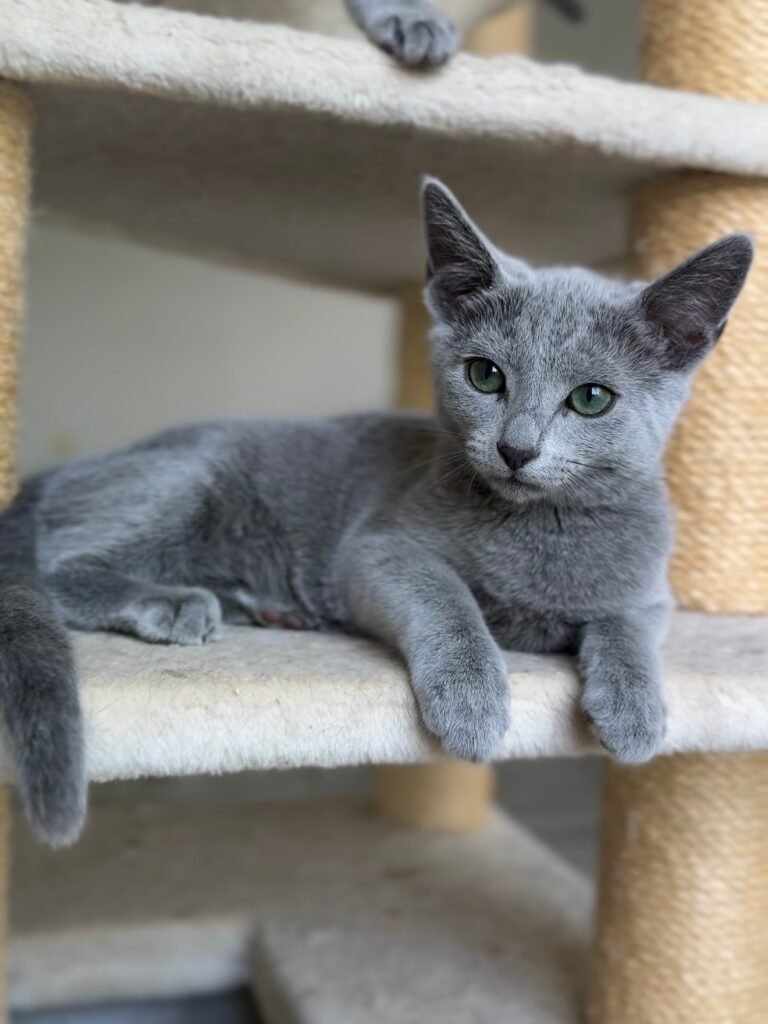
Cats talk mostly with their bodies. Unlike dogs, they do not have a wide range of facial expressions to work with, so the message is carried by the ears, the tail, the posture, the eyes and the whiskers — together. No single signal tells you everything: a tail flick can mean irritation or intense focus depending on what the ears and eyes are doing, and wide pupils can mean fear, play or excitement depending on the situation. Read the signals as a cluster, in context, and you will understand your cat far better than any single “wagging tail means happy” rule ever could. This guide covers the four parts beginners should learn first — ears, tail, eyes and whiskers — plus the slow blink, the most rewarding signal of all.
The first rule: read the cluster, not one signal
A cat that is relaxed holds its ears up and forward, its body loose, its tail up, and it may blink slowly at you. A frightened cat makes itself small: crouched low, ears turned back, tail tucked in, pupils wide. A cat that feels it may have to fight makes itself big, with its back arched and its fur on end. Hissing and growling are warnings to back off, and a thrashing tail means the cat is annoyed or about to lash out.
None of those pictures comes from one body part alone. The ears are the fastest signal to change, so they are often the first thing to check up close; the tail is the largest and can be read from across the room; the eyes tell you about arousal and trust; the whiskers tell you what the cat is investigating. Learn each part on its own, then practise putting them together — and always ask what is happening around the cat, because the same posture in a sunny window and in a vet waiting room means two different things.
Ears: the quickest mood dial
Each ear is moved by more than twenty muscles, which lets a cat rotate its ears almost 180 degrees — and that mobility makes them a precise mood dial. Research on cat-to-cat interactions has found ear position more predictive of how an interaction will end than tail position, and vets regard it as one of the most reliable single indicators of a cat’s emotional state.
- Forward and upright: relaxed, alert and interested. The cat feels safe and is engaged with its surroundings. This is the ear position of a cat that is happy to be approached.
- Swivelled sideways, the so-called “airplane ears”: anxious, unsure, or mildly irritated. The cat is assessing something it is not sure about and has not decided whether to stay or leave. Give it space and let it decide.
- Flattened flat back against the head: frightened, defensive, or close to lashing out. The cat is protecting its ears from injury in a possible fight, and it is telling you clearly that it feels a fight may be imminent. Back off, do not reach for it, and do not stare.
Ears change before tails do, so once you are within a few metres they become the better instrument. If you only learn one thing from this guide, learn the ears.
Tail: the long-range signal
The tail is the signal owners most often misread, because they borrow the dog’s rulebook. A cat’s tail wag is not a dog’s wag. In cats, a slow, low swish or a fast thrash usually means irritation or overstimulation, not happiness.
- Straight up, often with a gentle curl or a quiver at the tip: a confident, friendly greeting — often the first thing a happy cat does when you walk in. Respond with a gentle acknowledgement: a slow blink, a chin scratch, or simply a hello.
- Held low, tucked under the body or wrapped tightly around it: anxious, trying to look small, or trying to disappear. Leave the cat alone until it chooses to come out.
- Tip twitching while the rest of the tail is still: focus — interest, play, or the start of irritation. Watch what happens next; if the twitch becomes a thrash, stop what you are doing.
- Lashing, thumping or thrashing from side to side: stop. The cat is annoyed, overstimulated or about to lash out. This is the signal people miss most often when stroking a cat that has had enough — the tail says stop well before the teeth do.
- Puffed up, fur on end, held high or arched: frightened or defensive, trying to look bigger. Give the cat a clear escape route and look away.
A tail held straight up is the one genuinely reliable “happy” signal in the tail’s vocabulary. Everything else needs the ears and eyes alongside it.
Eyes: pupils, gaze and the slow blink
A content cat’s eyes are round or half closed, with narrow pupils. A playful cat’s eyes are big and its pupils may be wide. Fear widens both the eyes and the pupils as the body gets ready to fight or flee, and a cat about to lash out often stares straight at what is bothering it — a hard, unbroken stare is closer to a challenge than a greeting, which is why the person in the room who dislikes cats is often the one the cat walks towards: they are the only one not staring.
The single most rewarding signal to learn is the slow blink, often called a cat smile. A slow blink is a series of half-blinks followed by a long narrowing of the eyes or a full eye closure, and it means the cat feels safe and relaxed with you. In a 2020 study at the University of Sussex, cats narrowed their eyes more when their owners slow-blinked at them than when there was no interaction, and cats were more likely to approach a stranger’s outstretched hand after that stranger had slow-blinked at them. The researchers suggest slow blinks work as a positive signal between cats and people.
Try it yourself: hold soft eye contact for a second or two, then slowly close your eyes and open them again. If the cat slow-blinks back, it is telling you it feels safe with you — and you have just had a conversation in its own language. Do not stare to force it; a slow blink only works because it is the opposite of a stare.
Pupils need context. Wide pupils in a dark room are just the eyes letting light in. Wide pupils in bright light, with flattened ears and a crouched body, mean fear. Wide pupils during play, with ears forward and a loose body, mean excitement. Read the pupils last, after the ears and the tail have told you the mood.
Whiskers and posture: the supporting cast
Whiskers fanned forward mean the cat is investigating something at close range and is engaged with it. Whiskers pulled back flat against the cheeks mean the cat is defensive or afraid. Whiskers held out loosely to the sides, with a soft body, mean relaxed.
Posture fills in the rest. A relaxed cat sits or lies with its body loose, sometimes with its paws tucked under it. A frightened cat crouches low, trying to take up as little space as possible. A defensive cat arches its back and raises its fur to look bigger. And the belly-up posture is the one owners misread most: a cat lying on its back feels safe enough to expose its belly, but it is usually not asking for a belly rub — most cats will grab and scratch a hand that tries. Admire the trust, do not test it.
Four states, and what each one asks of you
| State | What you will see | What to do |
|---|---|---|
| Relaxed | Tail up or loosely curled, ears forward, whiskers out to the sides, body soft, paws tucked under, slow blinking | Stay where you are and let it come to you. This is the only state worth trying to photograph. |
| Playful | Ears forward, pupils wide, body low and wiggly, tail tip twitching, pouncing | Play with a wand toy, not your hands, and stop if the tail starts thrashing. |
| Stressed or frightened | Ears sideways or back, tail tucked in, body crouched low, pupils wide, whiskers back | Back off, look away, give it an escape route and a hiding place. Do not chase, corner or pick it up. |
| About to lash out | Ears flat, tail lashing, body tense or arched, staring at the threat, hissing or growling | Stop immediately, move away slowly, do not reach for the cat. Wait until it has calmed down completely before trying again. |
Common mistakes beginners make
The first is treating a cat like a small dog: reading a wagging tail as happiness, reaching straight for the belly, or staring into its eyes to show affection. The second is reading one signal and ignoring the rest — a tail held high means little if the ears are flat and the pupils are wide. The third is approaching a frightened cat to comfort it: a scared cat does not want to be picked up and held, it wants distance and a hiding place, and it will come back to you once it feels safe. The fourth is punishing a cat for hissing or swatting. A hiss is a warning, not naughtiness — it is the cat asking for space in the only language it has, and a cat whose warnings are punished stops warning and goes straight to biting.
The simple version
Learn the ears first — forward means at ease, sideways means unsure, flat means frightened. Learn the tail second — straight up is a friendly greeting, tucked is fear, thrashing means stop, and a cat’s wag is not a dog’s wag. Learn the slow blink third — it is the closest thing to a cat smile, and returning one is the easiest conversation you will ever have with your cat. Read all three together, in context, and give a frightened cat space instead of comfort. Your cat has been talking to you all along; now you know how to listen.
If you have general questions about bringing a kitten home, our kitten FAQ covers the first-week routine — and the more you understand what your kitten is telling you, the calmer those first weeks will be for both of you.


