The British Shorthair is the calm, round-faced cat in the blue-grey coat — steady, undemanding and content to sit near you rather than on you. It is one of the easiest pedigree breeds to live with, and it has one care issue that matters more than all the rest: weight. This is a compact, heavy-boned breed that gains weight quietly, and its dense coat and broad frame hide the gain until it is well established. This guide covers weight, the coat, quiet play and health screening, so you can keep a British Shorthair healthy for its long life.
The breed in brief
The British Shorthair is one of the oldest recognised pedigree breeds, descended from the cats brought to Britain centuries ago and refined into the breed recognised today by the GCCF, the CFA, TICA and FIFe. It is a medium to large cat — typically around 4–8 kg, with males larger than females — compact and powerfully built, with a broad chest, a round head, large round eyes and a short, thick tail. It is slow to mature, often not fully grown until three years old.
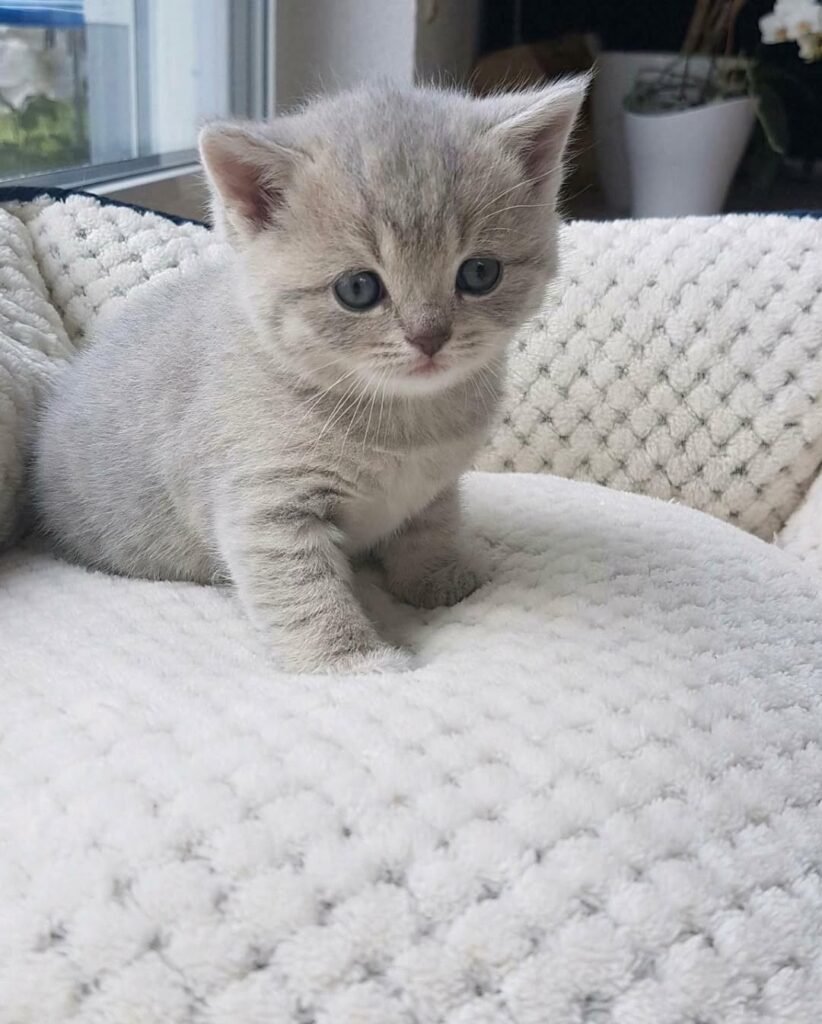
The coat is dense, plush and crisp to the touch, standing away from the body rather than lying flat; the classic colour is blue (a solid grey), but the breed comes in many colours and patterns. The temperament is the breed’s great strength: calm, even-tempered and quietly affectionate. British Shorthairs like being near their people without demanding constant cuddles, they tolerate children and other pets well, and they are not usually vocal or destructive. They are indoor cats by inclination, and they are happiest in a steady, predictable home.
Weight: the headline care issue
If there is one thing to get right with a British Shorthair, it is weight. The breed’s broad frame and dense coat make excess weight hard to spot — a cat can be noticeably overweight before it looks it. Judge by body condition, not by the scales alone: you should be able to feel the ribs easily under a thin layer of fat, and there should be a visible waist when you look down at the cat from above and a slight tuck when you look from the side. If the ribs are hard to find, or the waist has disappeared, the cat is carrying too much.
The routine that works is simple but needs consistency. Measure food with kitchen scales or a measuring cup rather than pouring freely, follow the feeding guide for the cat’s weight and age, and count treats inside the daily allowance rather than on top of it. Puzzle feeders and food-dispensing toys slow eating down and turn feeding into play, which suits this breed well. Several small meals a day work better than one large bowl left down all day.
Never crash-diet a cat. A sudden, sharp cut in food can cause serious liver problems in cats, so any weight loss must be gradual and supervised by a vet — ask your vet to set a target weight and a safe feeding plan. Weigh your cat regularly, and ask the vet to check its body condition at each visit. A lean British Shorthair is a healthier, longer-lived one, and keeping it lean is far easier than slimming it down later.
The coat: weekly care
The British Shorthair’s dense double coat is surprisingly easy to look after. A weekly brush with a soft bristle brush or a rubber grooming mitt removes loose hair and spreads the coat’s natural oils — five to ten minutes is usually enough. During the heavier seasonal moult, usually in spring, brushing two or three times a week keeps the loose hair under control and reduces hairballs.
Use grooming time to inspect the skin underneath: the dense coat hides flakes, lumps, redness and parasites, so run your hands over the whole body as you brush. Routine bathing is not needed — a British Shorthair’s coat stays clean with regular brushing, and a bath is only called for if the cat has rolled in something. If you do bathe one, use a shampoo made for cats, rinse thoroughly and dry the cat well.
The rest of the routine is the same as for any cat: trim the claws every two to three weeks, check the ears weekly and clean them only if there is visible debris, and brush the teeth several times a week with cat-safe toothpaste. Dental disease is worth watching in this breed, so regular tooth brushing and a vet dental check matter more than they seem to.
Quiet play: short bursts, every day
British Shorthairs are low- to moderate-energy cats. They do not need the long play sessions of a Bengal or the climbing routes of a Norwegian Forest cat — but they do need daily play, and without it they grow bored, stiff and heavier. Short bursts suit them best: a total of around 15–20 minutes a day, split into a few short sessions, using wand toys worked at ground level, rolling toys, and food puzzles that make the cat think.
Low climbing platforms and a sturdy scratching post suit this breed better than tall, wobbly trees — a British Shorthair is a heavy cat and likes its furniture solid. It also enjoys simply being near people: sitting beside you on the sofa, watching the household from a favourite chair, following you from room to room at a calm pace. Brief, positive handling from kittenhood — being picked up gently, having paws and ears touched, then being put down again — keeps an adult British Shorthair comfortable with being handled, but always give it the chance to walk away.
Play matters for weight as much as for mood. A cat that moves every day burns the calories its measured food provides; a cat that only sleeps and eats will gain weight even on a careful diet. If your British Shorthair has stopped playing, that is worth noticing — it can be an early sign of pain, especially joint pain, and a vet visit is the right response.
Health and screening to ask about
Responsible breeders screen breeding cats for the hereditary conditions relevant to the breed, and the questions to ask differ by breed.
For the British Shorthair, the conditions most often discussed are hypertrophic cardiomyopathy (HCM), the most common heart disease in cats, diagnosed by echocardiogram performed by a veterinary cardiologist, and polycystic kidney disease (PKD), an inherited kidney condition for which a DNA test exists. Ask also about dental disease and joint or mobility changes as the cat ages — both are worth watching in a heavy-boned breed. No screening programme makes any cat “risk-free” — it reduces risk and shows the breeder is breeding carefully. Always ask to see the actual results for the actual parents (our guide to choosing a responsible breeder lists the questions to ask). A vet who sees the cat at least once a year — more often as it ages — is part of the care routine, not an emergency measure. British Shorthairs commonly live 12–17 years.
Is a British Shorthair right for you?
- Choose a British Shorthair if you want a calm, steady companion, you are happy with measured food and quiet daily play, and you like a cat that is near you without demanding constant attention.
- Think again if portion control and quiet daily play sound like a chore — this is a breed that gains weight quietly and shows it late — or if you want a highly active, vocal or constantly cuddly cat.
Still deciding? Read the full breed guide for the British Shorthair — and if you are considering a kitten, start with an enquiry and an honest conversation about your household, your working hours and how much quiet play time you can give every day. The right match matters more than the fastest one. If you have general questions about bringing a kitten home, our kitten FAQ covers the basics.