The Siberian is a big, gentle, forest cat from Russia, built by centuries of cold winters into one of the hardiest breeds in the cat fancy. Its defining feature is a dense triple coat that thickens in winter and sheds heavily in spring — and that coat decides most of the breed’s care routine. This guide covers the coat, the shedding seasons, the grooming routine, feeding, health screening and the home a Siberian needs, so you can decide honestly whether this breed fits your life.
The breed in brief
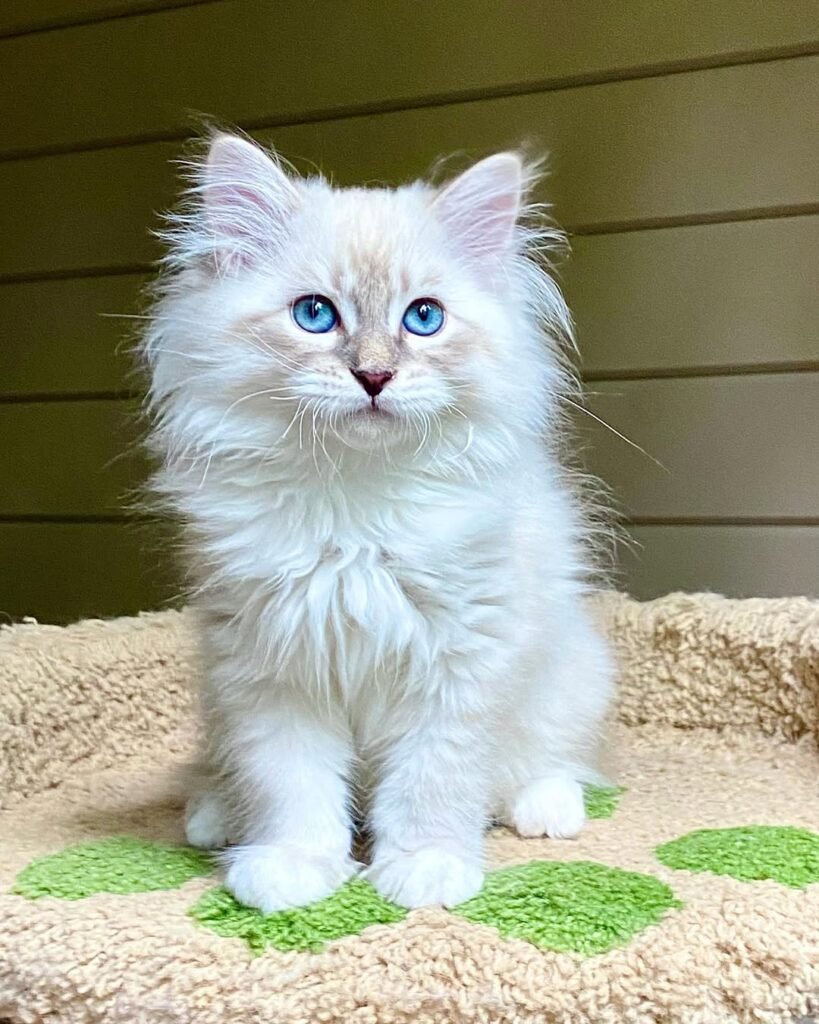
The Siberian — also known as the Siberian Forest Cat or Moscow Longhair — is the national cat of Russia, and one of the oldest natural breeds. It developed in the forests of Siberia, where only cats with a weatherproof coat survived the winters, and it remains a large, powerful, slow-maturing cat: adults commonly weigh 4.5–9 kg, and many do not reach full size until three to five years old.
The temperament is one of the breed’s great strengths: Siberians are affectionate, playful and dog-like in their loyalty, following their people around the house and greeting them at the door. They are usually good with respectful children and with other pets, and they are famously agile for their size — strong jumpers and climbers who enjoy height. They are also, unusually for a long-haired breed, often fond of water.
The breed is recognised by the major registries, including TICA, the CFA, the GCCF and FIFe.
One claim to set aside at the start: Siberians are sometimes described as hypoallergenic. They are not. No cat breed is truly hypoallergenic — all cats produce the allergenic protein Fel d 1 in their saliva and skin glands, and sensitivity varies from person to person. Some people with mild allergies report coping better with Siberians, but that is not a guarantee, and anyone with allergies should spend time with the breed before committing.
The triple coat: what it is and why it matters
The Siberian coat is not just long hair. It is a dense triple coat of three distinct layers, each with a job:
- The downy undercoat, soft and close to the skin, provides insulation and warmth. It is the layer that sheds most heavily in the seasonal coat blows.
- The middle coat (awn hair), slightly longer and denser, adds volume and warmth and helps hold the coat’s shape.
- The outer guard hairs, the longest and coarsest layer, are water-resistant and protective, helping rain and snow run off instead of soaking in, and giving the coat its natural shine.
The coat changes with the seasons: it thickens in winter, when the undercoat grows denser, and thins again as the weather warms. The fur is fullest around the neck, chest and hind legs — the ruff, the trousers and the plumed tail that give the Siberian its forest-cat silhouette.
Shedding: moderate all year, heavy twice a year
Siberians shed moderately all year round, with two heavy “coat blows” each year — the heaviest in spring, when the thick winter undercoat drops, and a lighter one in autumn. During a coat blow, loose undercoat comes out in large quantities, and a missed week of brushing then can turn into mats behind the ears and under the legs. Indoor heating and lighting can even shedding out across the year, so some indoor Siberians shed more steadily and less seasonally than cats that live with natural light and temperature changes.
Expect more loose fur on furniture and clothes during the blows, and plan for it: a lint roller, regular vacuuming and a grooming routine that steps up in spring and autumn are part of owning this breed. Skip a Siberian if heavy seasonal shedding is a deal-breaker — the spring coat blow is not negotiable.
The grooming routine: regular, not heroic
The routine for a Siberian is regular rather than intensive: brush two to three times a week in a normal week, in sessions of about ten to fifteen minutes, and brush daily during the spring and autumn coat blows. That is the consistent advice across grooming guides; one outlier source suggests daily 20–30 minute brushing year-round, but the majority view — and the one this guide follows — is two to three sessions a week, stepping up to daily only when the coat is blowing.
The tools are simple. A wide-toothed stainless-steel comb is the everyday tool: it reaches the undercoat and finds small knots near the skin before they become mats. A slicker brush, with fine close-set pins, lifts loose fur from the top and middle of the coat and is especially useful during a coat blow. An undercoat rake helps during heavy shedding. Work in the direction of hair growth, in short, gentle strokes, and never pull through a tangle — work it apart gently with your fingers or a comb, and ask a groomer or vet for help if a mat is tight against the skin. Never cut a mat out with scissors close to the skin.
Check the mat-prone places first at every session: behind the ears, in the armpits, across the belly and chest ruff, and in the trousers — the long fur at the back of the hind legs. A regular routine also lets you notice changes early: skin dryness, sore or tender areas, or weight loss that would otherwise hide under a dense coat. Start grooming while your Siberian is still a kitten, so brushing becomes routine before the adult coat grows in.
Bathing and the wider grooming routine
Most Siberians only need a bath when they actually need one — if the coat is dirty, greasy, or has something in it that brushing will not remove. The water-resistant outer layer keeps the coat clean, and frequent baths are not part of the routine. A bath can help during a coat blow or for a greasy coat, and many Siberians tolerate water better than most breeds if they were introduced to it young.
When you do bathe a cat, use a shampoo made for cats, rinse thoroughly — shampoo left in a thick coat irritates the skin — and dry the coat completely. A thick triple coat holds water for a long time, and a damp undercoat can chill a cat and mat as it dries.
The rest of the routine is the same as for any cat, but it matters more with a dense coat: trim the claws every two to three weeks and check the paws weekly — paw fur traps litter and debris — check the ears weekly and clean them gently only as your vet has shown you, and brush the teeth regularly, since dental disease is common in cats.
Feeding and weight
Siberians are large, active cats with a healthy appetite, and they grow slowly — many are still filling out at three years old. Feed a good-quality complete cat food in measured amounts, following the feeding guide for the cat’s weight and age, and adjust as the cat matures rather than feeding an adult amount to a growing kitten. Keep treats small. Fresh water should always be available; some Siberians prefer a wide bowl or a fountain.
Because the coat hides the body shape, weight is easy to miss in this breed. You should be able to feel the ribs easily under a thin layer of fat — check by touch, not by eye, and weigh your cat regularly. Ask your vet whether its weight is right at each visit.
Health and screening to ask about
Responsible breeders screen breeding cats for the hereditary conditions relevant to the breed, and the questions to ask differ by breed.
For the Siberian, the condition most often discussed is hypertrophic cardiomyopathy (HCM), the most common heart disease in cats, diagnosed by echocardiogram performed by a veterinary cardiologist. Ask also about the parents’ general health and veterinary care, and about any screening the breeder carries out for the breed.
No screening programme makes any cat “risk-free” — it reduces risk and shows the breeder is breeding carefully. Always ask to see the actual results for the actual parents (our guide to choosing a responsible breeder lists the questions to ask).
The home a Siberian needs
A Siberian needs a home with room to move and climb. Despite their size, they are agile and athletic, and they enjoy tall cat trees, shelves and window perches — height matters to this breed. They need daily play: interactive sessions with wand toys, fetch, and puzzle feeders that make them work for food. They are social cats that do best with company, and many do well with another cat or a cat-friendly dog, provided introductions are done gradually.
They are usually good with respectful children, and their patient, tolerant nature is one of the reasons the breed suits family homes — but children should still be taught to handle a cat gently and to leave it alone when it walks away. Siberians adapt well to a household with a normal working routine, as long as someone is there for daily play and the grooming sessions the coat requires.
Is a Siberian right for you?
- Choose a Siberian if you want a large, affectionate, playful companion, you enjoy a regular grooming ritual, and you can accept heavy seasonal shedding and a daily brushing routine in spring and autumn.
- Think again if you want a low-shedding cat, you have no time for two to three brushing sessions a week, or heavy seasonal fur on furniture would be a problem.
Still deciding? Read the full breed guide for the Siberian (/siberiancatsbreedpage/) — and if you are considering a kitten, start with an enquiry and an honest conversation about your household, your working hours and how much grooming time you can give every single week. The right match matters more than the fastest one. If you have general questions about bringing a kitten home, our kitten FAQ (/kitten-faq/) covers the basics.