Welcoming a kitten into your home is a joyful experience, but it also comes with important responsibilities. Kittens need more than food and affection. They require a safe environment, a suitable routine, regular grooming, age-appropriate play, veterinary care, and patient guidance as they grow.
The habits established during the first months can influence a cat’s confidence, behaviour, health, and relationship with its family for years to come. A well-planned care routine helps your kitten feel secure while giving you the opportunity to notice changes in appetite, energy, grooming, or behaviour.
Whether you are preparing for a Bengal, Persian, Siamese, Siberian, or another breed, this essential kitten-care guide covers the most important areas of daily life.
Understanding Your Kitten’s Needs
Kittens grow quickly. Their bodies, immune systems, muscles, coordination, and social skills are still developing, so their needs are different from those of adult cats.
A young kitten generally requires:
- Several balanced meals each day
- Constant access to fresh water
- A clean and comfortable living area
- Safe opportunities to play and explore
- Plenty of sleep
- Regular litter-tray cleaning
- Gentle grooming
- Veterinary guidance
- Positive social interaction
- A predictable routine
Every kitten develops at an individual pace. Breed characteristics can influence activity levels, grooming requirements, and social behaviour, but personality also plays a major role.
Observe your kitten carefully and adjust the routine according to its age, confidence, coat type, health, and energy level.
Feeding Your Kitten Properly
Nutrition is one of the most important parts of kitten care. Growing kittens require food designed to support development, energy, bones, muscles, and overall health.
Choose a complete kitten food rather than food intended for adult cats. Kitten formulas are generally developed with the nutritional needs of growing cats in mind.
Ask the breeder what food your kitten is already eating before bringing it home. Continuing the same diet during the first days can reduce the risk of digestive discomfort.
A sudden change in food may cause:
- Loose stools
- Vomiting
- Reduced appetite
- Stomach discomfort
- Refusal to eat
When changing food, introduce the new option gradually over several days. Begin by adding a small amount of the new food to the current food and slowly increase the proportion.
How Often Should a Kitten Be Fed?
Young kittens usually benefit from several small meals throughout the day because their stomachs are small and their energy needs are high.
The exact number of meals depends on the kitten’s age, size, food type, health, and veterinary recommendations.
Create a regular feeding schedule instead of leaving large amounts of food available without monitoring. Scheduled meals make it easier to observe appetite and notice changes.
Follow the portion guidance provided by the food manufacturer, breeder, or veterinarian. These recommendations may need to be adjusted according to the individual kitten.
Avoid overfeeding. A kitten may appear hungry because it enjoys eating, but excessive portions can lead to unhealthy weight gain.
Treats should be offered in moderation and should never replace balanced kitten food.
Wet Food, Dry Food, or Both?
Some families choose wet food, some use dry food, and others provide a combination.
Wet food contains a higher moisture level and may help support hydration. Dry food can be convenient and may work well in measured portions. The most suitable approach depends on the kitten’s preferences, health, routine, and professional guidance.
When feeding both types, remember that the total daily amount matters. Do not provide a full recommended portion of wet food and a full recommended portion of dry food unless specifically instructed, as this may result in overfeeding.
Always serve food in clean bowls and remove uneaten wet food according to safe storage guidance.
Fresh Water and Hydration
Fresh drinking water should always be available.
Place water away from the litter tray and, when possible, separate it slightly from the food bowl. Some cats prefer drinking in a different location from where they eat.
Use a wide, shallow bowl made from an easy-to-clean material such as ceramic or stainless steel.
Wash the bowl and replace the water daily. During warm weather, check the water more frequently.
Some kittens enjoy drinking from a pet fountain. Moving water may encourage interest, although a fountain must be cleaned regularly to prevent the build-up of dirt or residue.
Monitor your kitten’s drinking habits. A major increase or decrease in water consumption should be discussed with a veterinarian.
Foods Kittens Should Not Eat
Human food is not always safe for cats. Some foods and ingredients can be harmful.
Avoid offering your kitten:
- Chocolate
- Alcohol
- Caffeinated drinks
- Onions
- Garlic
- Grapes
- Raisins
- Cooked bones
- Raw dough
- Foods containing artificial sweeteners
- Heavily seasoned meals
- Very salty foods
- Dog food as a regular diet
Milk is also not always suitable. Many cats cannot digest standard cow’s milk properly, and it may cause digestive upset.
Do not give vitamins, oils, minerals, or dietary supplements without professional advice. A complete kitten food should already provide an appropriate nutritional balance.
Creating a Consistent Feeding Routine
Cats often feel more secure when daily activities happen at predictable times.
Try to feed your kitten at approximately the same times each day. Use the same feeding area and minimise distractions during meals.
A regular feeding routine can help with:
- Appetite monitoring
- Litter habits
- Weight management
- Daily planning
- Building trust
- Reducing food-related anxiety
Record your kitten’s normal eating habits. When you understand what is normal, it becomes easier to notice when something changes.
Grooming Your Kitten
Grooming is not only about appearance. It supports coat condition, reduces loose hair, helps prevent tangles, and gives you the opportunity to inspect the skin, ears, eyes, teeth, and paws.
Begin grooming while your kitten is young. Keep the first sessions short, calm, and positive.
Allow the kitten to smell the brush before using it. Start with a few gentle strokes and stop before the kitten becomes frustrated.
Reward calm behaviour with praise, play, or a small suitable treat.
Never hold the kitten down forcefully for routine grooming. This may create fear and make future sessions more difficult.
Grooming Short-Haired Kittens
Short-haired breeds such as Bengals and Siamese cats generally require less coat maintenance than long-haired breeds.
Brushing once or twice a week may help remove loose hair and distribute natural oils through the coat.
Use a soft brush or grooming mitt suitable for kittens.
Even when the coat is easy to maintain, regular grooming is still useful because it helps the kitten become comfortable with handling.
Check for:
- Redness
- Dry skin
- Unusual lumps
- Bald areas
- Fleas or flea dirt
- Scabs
- Excessive scratching
- Changes in coat texture
Contact a veterinarian if you notice a persistent skin or coat problem.
Grooming Long-Haired Kittens
Long-haired breeds such as Persians and Siberians require more regular coat care.
Persian coats may need daily combing to prevent tangles and matting. Siberian coats also benefit from consistent brushing, particularly during seasonal shedding periods.
Use tools designed for the coat type. A combination of a wide-toothed comb and a suitable brush may be helpful.
Pay attention to areas where tangles commonly form, including:
- Behind the ears
- Under the front legs
- Around the chest
- Along the stomach
- Around the back legs
- Beneath the tail
Do not pull aggressively at knots. If a mat is close to the skin or difficult to remove, seek help from an experienced groomer or veterinarian.
Scissors can cause accidental injury and should not be used near the skin without proper experience.
Eye and Face Care
Some kittens, particularly certain Persian cats, may require regular cleaning around the eyes and face.
Use a soft, clean, damp pad and wipe gently. Use a separate pad for each eye to reduce the risk of transferring dirt or irritation.
Avoid using human cosmetic products, strong chemicals, or fragranced wipes.
A small amount of normal discharge may sometimes be present, but persistent watering, swelling, redness, discomfort, or coloured discharge should be assessed by a veterinarian.
Regular face care can also help prevent staining and keep the fur clean.
Ear Care
Inspect your kitten’s ears regularly.
Healthy ears should generally appear clean and should not have a strong smell.
Look for:
- Excessive wax
- Dark debris
- Redness
- Swelling
- Frequent scratching
- Head shaking
- Unusual odour
- Signs of discomfort
Do not insert cotton swabs or other objects deeply into the ear canal.
Only use an ear-cleaning product if recommended for cats, and follow professional instructions carefully.
Nail Care
Kittens have sharp claws and may need regular nail trimming.
Begin by gently touching and holding the paws during relaxed moments. Press lightly on each toe so the claw extends.
Use nail clippers designed for cats and remove only the sharp transparent tip. Avoid the pink area inside the claw, which contains nerves and blood vessels.
Trim one or two claws at a time during early sessions if necessary.
A stable scratching post can help support normal claw maintenance, but it does not always remove the need for trimming.
Ask a veterinarian or professional groomer to demonstrate the process if you are unsure.
Dental Care
Dental care should begin early.
Introduce your kitten gradually to having its lips and mouth touched. Later, a cat-safe toothbrush and toothpaste may be introduced with professional guidance.
Never use human toothpaste, as it is not designed to be swallowed by cats.
Good dental habits may help reduce the risk of future oral problems.
Watch for signs such as:
- Bad breath
- Difficulty eating
- Drooling
- Red gums
- Pawing at the mouth
- Avoiding hard food
- Visible discomfort
Any suspected dental issue should be discussed with a veterinarian.
Bathing a Kitten
Most healthy cats do not require frequent bathing because they groom themselves.
Bathing may occasionally be needed when the coat becomes dirty, sticky, or contaminated with something unsafe.
Use only a gentle shampoo formulated for cats. Human shampoo can irritate feline skin.
Keep the water comfortably warm, avoid the face and ears, and dry the kitten thoroughly in a warm environment.
Long-haired kittens may need careful drying to prevent the coat from remaining damp.
Never leave a wet kitten in a cold or draughty area.
Play and Physical Activity
Play supports physical development, coordination, confidence, and mental stimulation.
Kittens learn important skills through chasing, pouncing, climbing, hiding, and exploring.
Provide several short play sessions throughout the day. Young kittens may become tired quickly, so allow rest between sessions.
Useful toys include:
- Wand toys
- Lightweight balls
- Soft toy mice
- Tunnels
- Puzzle feeders
- Kicker toys
- Interactive tracks
- Safe climbing furniture
Rotate the toys every few days to maintain interest.
Always supervise toys containing string, feathers, ribbons, elastic, or removable parts.
Avoid Using Hands as Toys
It may seem harmless to allow a small kitten to bite or chase fingers, but this can create unwanted habits.
As the kitten grows, playful biting and scratching can become more painful.
Use a toy between your hands and the kitten. Redirect biting toward a suitable toy rather than punishing the kitten.
If play becomes too rough, pause the interaction calmly and allow the kitten to settle.
Consistent redirection teaches the kitten which behaviours are appropriate.
Breed-Specific Play Needs
Different breeds may enjoy different levels of activity.
Bengal kittens are often highly energetic and may need climbing towers, puzzle feeders, interactive play, and frequent mental stimulation.
Siamese kittens are usually social and may prefer games involving direct interaction with people.
Siberian kittens are often playful and athletic, so sturdy climbing furniture and active games may be appreciated.
Persian kittens may enjoy gentler and shorter play sessions, although individual personalities vary.
Do not assume that every kitten will match the typical breed description. Observe what your kitten enjoys and provide suitable activities.
Safe Climbing and Scratching
Cats naturally seek elevated spaces. A secure cat tree or climbing shelf can help your kitten feel confident and provide exercise.
Make sure all climbing furniture is stable and cannot fall over.
Scratching posts should be:
- Tall enough for stretching
- Firmly secured
- Covered with a suitable scratching material
- Placed in areas the kitten uses
- Available in both vertical and horizontal styles when possible
Position one scratching surface near the sleeping area because cats often stretch and scratch after waking.
Another can be placed near furniture the kitten has started scratching.
Rest and Sleep
Kittens need a great deal of sleep to support growth and development.
Provide several quiet resting options, such as:
- A soft bed
- A covered cat bed
- An open carrier
- A blanket
- A raised sleeping platform
- A secure hiding place
Do not disturb the kitten unnecessarily while it is sleeping.
Children should be taught to leave a sleeping kitten alone.
A kitten that suddenly sleeps much more than usual, appears weak, or is difficult to wake may need veterinary attention.
Litter-Tray Care
A clean litter tray is essential.
Place it in a quiet, accessible area away from food and water. Avoid busy hallways, noisy appliances, and locations where the kitten may feel trapped.
Use the same litter type the kitten is familiar with when possible.
Remove waste regularly and clean the tray with a pet-safe product. Avoid powerful fragrances, as some cats may dislike them.
In homes with multiple cats, providing several litter trays can reduce competition and stress.
A useful general approach is to have one tray for each cat, plus an additional tray, when space allows.
Monitoring Litter Habits
Litter-tray behaviour provides useful information about your kitten’s health.
Pay attention to:
- How often the kitten urinates
- Stool consistency
- Straining
- Crying in the tray
- Blood
- Diarrhoea
- Constipation
- Accidents outside the tray
- Sudden avoidance of the tray
Do not punish accidents. First check the cleanliness, litter type, tray location, access, and possible health concerns.
Persistent changes should be discussed with a veterinarian.
Veterinary Health Preparation
Arrange veterinary care according to the breeder’s records and recommended schedule.
Bring all available documents, including:
- Vaccination records
- Microchip information
- Previous examination notes
- Parasite-prevention details
- Feeding information
- Registration documents where applicable
Your veterinarian can advise on vaccinations, parasite control, identification, nutrition, dental care, neutering, weight monitoring, and breed-specific health considerations.
Keep the veterinary clinic’s contact information easily available.
You should also identify an emergency veterinary service before you need one.
Signs That Require Veterinary Advice
Contact a veterinarian when you are concerned about a kitten’s health.
Warning signs may include:
- Refusing food
- Repeated vomiting
- Persistent diarrhoea
- Difficulty breathing
- Extreme tiredness
- Sudden weakness
- Swollen or painful areas
- Repeated coughing
- Eye or nose discharge
- Difficulty urinating
- Straining in the litter tray
- Significant changes in behaviour
- A noticeable injury
- Suspected poisoning
- Ingestion of a foreign object
Young kittens can become unwell quickly. It is safer to ask for professional advice when something does not seem right.
Parasite Prevention
Kittens may require protection against internal and external parasites.
Do not use a product simply because it is sold for pets. Some products intended for dogs can be dangerous for cats.
Use only treatments recommended for your kitten’s age, weight, and species.
Your veterinarian can advise on an appropriate schedule for flea prevention, worming, and other parasite-control needs.
Weight and Growth Monitoring
Monitor your kitten’s growth and body condition.
A veterinarian can explain how to assess whether the kitten is growing appropriately.
Regular weighing can be helpful, particularly during the early months. Use the same scale and record the results.
Changes in weight should be considered alongside appetite, energy, digestion, and overall behaviour.
Do not attempt to restrict a growing kitten’s food without veterinary guidance.
Socialisation and Confidence
Positive socialisation helps kittens become comfortable around people, handling, household sounds, carriers, grooming, and new experiences.
Introduce new situations gradually.
Useful early experiences may include:
- Meeting calm people
- Hearing normal household noises
- Gentle brushing
- Paw handling
- Entering the carrier
- Exploring new rooms
- Playing with different toys
- Calm interaction with suitable pets
- Short, positive car journeys when necessary
Never overwhelm the kitten with too many experiences at once.
Allow the kitten to retreat when it feels uncertain.
Establishing a Daily Routine
A consistent routine can help your kitten feel safe.
A simple day may include:
- Morning feeding
- Litter-tray cleaning
- A short play session
- Rest
- Midday meal
- Gentle grooming
- Evening play
- Final meal
- Quiet settling time
The exact routine can be adapted to your household.
Consistency is more important than following a perfect timetable.
Kitten-Proofing the Home
Continue checking the home as the kitten grows and becomes more confident.
Secure:
- Electrical wires
- Open windows
- Balconies
- Cleaning products
- Medicines
- Plastic bags
- Sharp objects
- Small items
- String and ribbon
- Breakable decorations
- Unstable shelves
- Open bins
- Toxic plants
Check washing machines, dryers, cupboards, ovens, and furniture before closing or operating them.
Kittens can hide in surprisingly small spaces.
Preparing for Time Alone
Kittens need interaction, but they should also learn to settle independently for short periods.
Before leaving the kitten alone, provide:
- Fresh water
- A clean litter tray
- A safe resting area
- Suitable toys
- A scratching post
- A secure room
- A comfortable temperature
Remove toys that require supervision.
Increase time alone gradually rather than leaving a newly arrived kitten for a long period immediately.
Very young kittens should not be left without appropriate care for extended periods.
Common Kitten-Care Mistakes
Common mistakes include:
- Changing food too quickly
- Overfeeding treats
- Using hands as toys
- Ignoring grooming until tangles appear
- Giving access to unsafe rooms
- Punishing litter accidents
- Leaving string toys unattended
- Delaying veterinary care
- Allowing unsupervised outdoor access
- Using unsuitable parasite treatments
- Overwhelming the kitten with visitors
- Expecting adult behaviour too soon
Patience, consistency, and preparation are more effective than punishment.
Essential Kitten-Care Checklist
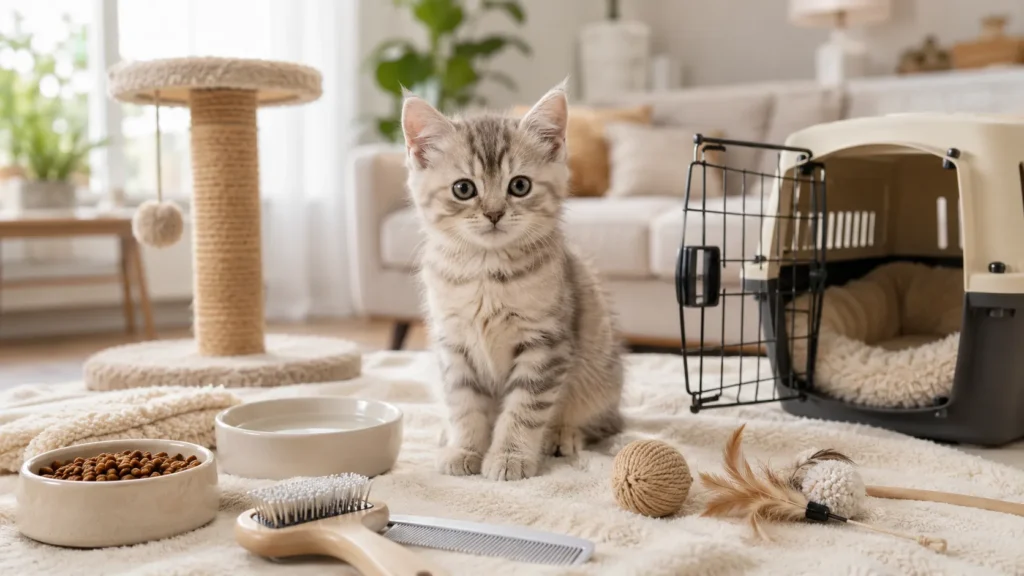
Your basic supplies should include:
- Complete kitten food
- Food and water bowls
- Litter trays
- Suitable litter
- A secure carrier
- Comfortable bedding
- A scratching post
- Safe toys
- Grooming tools
- Cat nail clippers
- Pet-safe cleaning products
- Veterinary records
- Emergency contact details
- Secure window protection
- A first-aid contact plan
Prepare these items before the kitten arrives.
Final Thoughts
Good kitten care combines suitable nutrition, clean surroundings, gentle grooming, safe play, regular observation, and professional veterinary guidance.
Feed a balanced kitten diet, provide fresh water, establish a predictable routine, and introduce grooming while the kitten is young. Use safe toys, offer climbing and scratching opportunities, and create several comfortable places to rest.
Monitor appetite, weight, litter habits, energy levels, coat condition, and behaviour. Small changes can sometimes provide early signs that a kitten needs additional support.
Most importantly, be patient. Your kitten is learning how to live in a new environment and trust a new family.
At Elite Cat Breeders, families can explore Bengal, Persian, Siamese, and Siberian kittens and receive guidance when preparing for their new companion. With responsible care, thoughtful preparation, and regular attention, your kitten can grow into a confident, healthy, and loving member of the family.