Bringing a new kitten home is an exciting experience for the whole family. It is the beginning of a special relationship filled with companionship, play, affection, and memorable moments. However, moving into a new environment can also feel overwhelming for a young kitten.
Your kitten will be leaving familiar surroundings, scents, routines, and possibly its mother and littermates. A calm, organised, and properly prepared home can make this transition much easier.
Preparing before your kitten arrives helps prevent unnecessary stress, reduces safety risks, and allows your new companion to settle into the household with confidence. This complete first-week guide explains what to buy, how to create a safe space, how to introduce family members and pets, and what to expect during the first few days.
Why Home Preparation Is Important
Kittens are naturally curious. They explore unfamiliar environments by climbing, scratching, smelling, tasting, and squeezing into small spaces. An ordinary household may contain many hidden risks, including electrical cables, unstable furniture, open windows, toxic plants, cleaning products, and small objects that can be swallowed.
Preparing your home is not only about buying supplies. It is about creating an environment where your kitten can safely explore, rest, eat, play, and build trust.
A prepared home also helps owners feel more confident. Instead of searching for supplies after the kitten arrives, you can focus on helping your new companion adjust.
Create a Quiet Welcome Room
Your kitten should not be given access to the entire home immediately. A large unfamiliar environment can feel confusing and intimidating.
Begin by preparing one quiet room where the kitten can spend its first few days. This may be a spare bedroom, home office, or another calm space away from heavy household traffic.
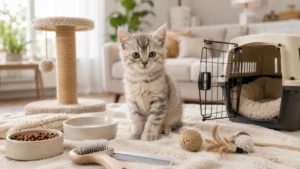
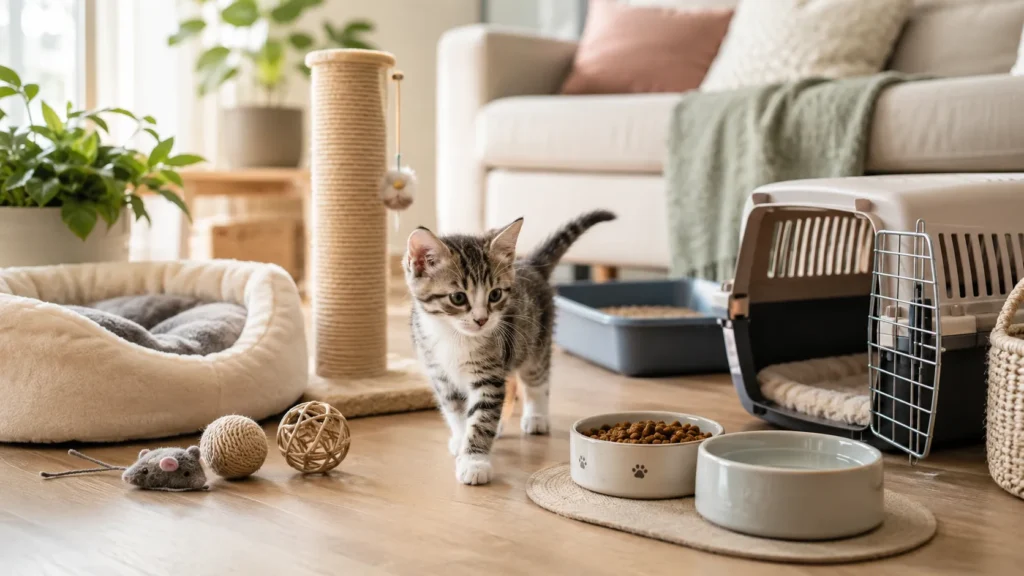
The room should include:
- A comfortable bed
- Food and water bowls
- A clean litter tray
- A scratching post
- A few safe toys
- A hiding place
- A secure carrier
- A soft blanket with a familiar scent, when available
Place the food and water away from the litter tray. Cats naturally prefer their eating area to be separate from their toilet area.
The welcome room should feel peaceful but not isolated. Family members can visit calmly, sit nearby, and allow the kitten to approach at its own pace.
Choose a Comfortable Kitten Bed
Kittens sleep for many hours each day, so they need a warm and secure place to rest. Choose a washable bed with soft material and raised sides.
Some kittens may ignore the bed at first and choose a blanket, box, or covered hiding place instead. This is completely normal. Cats often prefer sleeping areas that make them feel protected.
Place the bed away from cold air, direct sunlight, loud appliances, and busy doorways. A warm corner of the welcome room is usually ideal.
It can also help to provide a covered cat bed or open carrier with a blanket inside. This gives the kitten somewhere safe to retreat when it needs quiet time.
Prepare the Litter Tray
A suitable litter tray should be ready before the kitten arrives. Choose a tray that is easy for a small kitten to enter and exit.
The litter tray should be placed in a quiet and accessible location. Avoid placing it beside food bowls, washing machines, noisy appliances, or busy walkways.
It is often helpful to begin with the same type of litter the kitten used previously. Changing the litter, food, home, and routine at the same time may create unnecessary confusion.
Show the kitten where the tray is after arriving, but do not force it to remain inside. Most kittens with proper early training will quickly understand where to go.
Clean the tray regularly. Cats are naturally clean animals and may avoid a dirty litter box.
For larger homes, it may be useful to provide more than one litter tray once the kitten begins exploring additional rooms.
Purchase Suitable Food and Water Bowls
Choose shallow bowls that are easy for a kitten to use. Stainless steel or ceramic bowls are often practical because they are durable and easy to clean.
Avoid very deep bowls that press against the kitten’s whiskers. Some cats prefer wide, shallow dishes.
Fresh water should always be available. Place the water bowl separately from the food bowl, as some cats prefer drinking away from their feeding area.
A pet water fountain may encourage some kittens to drink more, although it is not essential during the first week.
Wash food and water bowls daily to maintain good hygiene.
Continue the Kitten’s Current Food
The first week is not usually the best time to make sudden changes to your kitten’s diet. Ask the breeder what food the kitten has been eating and continue with the same food during the transition.
A sudden dietary change may cause digestive discomfort. When changing food later, introduce the new option gradually by mixing increasing amounts with the previous food over several days.
Follow the breeder’s or veterinarian’s feeding guidance. Young kittens normally require several small meals throughout the day.
Measure appropriate portions and avoid giving large amounts of treats. Treats should never replace balanced kitten food.
Your kitten’s food should be specifically designed to support growth and development.
Kitten-Proof Every Accessible Area
Before allowing your kitten to explore the home, inspect each room from a kitten’s point of view.
Look under furniture, behind appliances, near windows, and around shelves. Kittens can enter surprisingly small spaces.
Secure or remove the following hazards:
- Loose electrical cables
- Phone chargers and headphones
- Small objects that can be swallowed
- Plastic bags
- Thread, string, ribbons, and elastic bands
- Human medicines
- Household chemicals
- Cleaning products
- Breakable decorations
- Sharp objects
- Unstable furniture
- Open fireplaces
- Hot cooking surfaces
- Unsecured bins
Keep toilet lids closed and check washing machines, dryers, ovens, cupboards, and drawers before using or closing them.
Kittens may climb into warm, dark, or enclosed places without being noticed.
Secure Windows, Balconies, and Doors
Windows and balconies can present serious risks. A standard insect screen may not be strong enough to prevent a determined kitten from escaping or falling.
Make sure windows have secure, pet-safe protection before opening them. Balconies should also be properly enclosed.
Remind family members to check doors carefully when entering or leaving the home. During the first few weeks, a kitten may become frightened and run through an open doorway.
Do not allow unsupervised outdoor access. Your kitten should remain safely indoors while settling into the new home.
Any future outdoor access should only be considered after appropriate veterinary care, identification, and safety planning.
Remove Unsafe Plants
Many common household plants can be harmful to cats. Kittens may chew leaves while exploring, even when they have never shown interest in plants before.
Move any questionable plants to an area the kitten cannot access. Do not assume that placing a plant on a shelf will be enough, because cats are capable climbers.
Before keeping a plant in the home, confirm that it is considered safe for cats.
You can provide safe alternatives such as cat grass, but introduce them carefully and keep the surrounding area clean.
Provide a Scratching Post
Scratching is a natural and necessary feline behaviour. Cats scratch to stretch, maintain their claws, exercise, and leave scent marks.
Provide a stable scratching post from the beginning. It should be tall enough for the kitten to stretch fully and strong enough not to fall over.
Some kittens prefer vertical posts, while others like horizontal scratching boards. Offering both can help protect furniture.
Place a scratching post near the kitten’s sleeping area because cats often scratch after waking. Another post can be placed near furniture the kitten may find attractive.
Reward the kitten with praise or play when it uses the correct scratching surface. Avoid punishment, as this can create fear without teaching the desired behaviour.
Select Safe and Engaging Toys
Play is essential for a kitten’s physical development and emotional well-being. It also helps build a positive relationship between the kitten and its new family.
Useful toys may include:
- Lightweight balls
- Soft toy mice
- Interactive wand toys
- Tunnels
- Puzzle feeders
- Kicker toys
- Small toys designed specifically for kittens
Avoid toys with loose pieces that can be chewed or swallowed. String, ribbon, yarn, and wand toys should only be used with supervision and stored safely after play.
Rotate toys instead of leaving everything available at once. This helps maintain the kitten’s interest.
Several short play sessions each day are usually better than one long and exhausting session.
Prepare a Safe Carrier
A secure carrier is essential for transporting your kitten home and attending veterinary appointments.
Choose a carrier that is well-ventilated, stable, and easy to clean. It should provide enough room for the kitten to stand, turn, and lie down comfortably.
Place a soft washable blanket or absorbent pad inside during travel.
After arriving home, leave the carrier open in the welcome room. Add a blanket or toy so the kitten can explore it voluntarily. When a carrier remains part of the normal environment, future journeys may feel less stressful.
Never allow a kitten to travel freely inside a moving vehicle.
Plan the Journey Home
Keep the journey home calm and direct. Avoid unnecessary stops, loud music, and excessive handling.
The kitten should remain securely inside the carrier throughout the journey. Position the carrier safely so it cannot slide or fall.
A light blanket placed partially over the carrier may help reduce visual stimulation, but make sure ventilation remains clear.
Speak softly and avoid opening the carrier in an unsecured location.
Once home, take the carrier directly into the prepared room, close the door, and allow the kitten to come out independently.
What to Do During the First Few Hours
When you open the carrier, your kitten may walk out immediately or remain inside for some time. Both reactions are normal.
Sit quietly nearby and allow the kitten to observe the room. Avoid pulling it from the carrier or passing it between family members.
Some kittens begin exploring quickly, while others hide until the environment feels safe.
Show the location of the litter tray, food, and water. Then provide space and quiet supervision.
Do not become concerned if the kitten does not eat immediately. Travel and environmental changes may temporarily reduce appetite. However, very young kittens should not go for extended periods without eating, so contact a veterinarian if you are concerned.
The First Night at Home
The first night can be challenging for a kitten. It may call, hide, or appear unsettled because everything is unfamiliar.
Keep the kitten in its prepared room with access to all essential supplies. A soft bed, warm blanket, and safe hiding place can provide comfort.
Spend some calm time with the kitten before bedtime, but avoid overstimulation.
Some owners choose to sleep nearby during the first night. This may provide reassurance, but it is not always necessary.
Maintain a quiet environment and allow the kitten to settle naturally. Avoid introducing it to the entire house during the night.
Introducing Family Members
Introduce family members gradually. Too many people surrounding the kitten at once can feel frightening.
Ask everyone to sit quietly and allow the kitten to approach. Hands should be offered slowly for the kitten to smell.
Avoid loud voices, sudden movements, and constant picking up.
Children should be supervised during every interaction. Teach them to:
- Stroke the kitten gently
- Avoid pulling the tail or ears
- Never chase the kitten
- Leave the kitten alone while sleeping or eating
- Respect hiding places
- Hold the kitten only with adult guidance
The kitten must always have the option to move away.
Introducing Other Pets
Introductions to resident pets should be slow and controlled. Do not place the new kitten directly in front of another cat or dog on arrival.
Begin by keeping the pets in separate areas. Allow them to become familiar with each other’s scent through bedding, toys, or closed doors.
For cats, scent swapping and brief visual introductions can help reduce tension. Feed both cats on opposite sides of a closed door so they begin associating each other’s presence with something positive.
Dogs should be calm, controlled, and supervised. A lead may be useful during early introductions. The kitten must have access to elevated areas or a safe room.
Never force interaction. The adjustment process may take days or several weeks.
Expanding Access to the Home
Once the kitten is confidently eating, drinking, playing, and using the litter tray, you can gradually introduce additional rooms.
Open one new area at a time and supervise exploration.
Keep the original welcome room available so the kitten can return to a familiar space.
Do not rush the process. A confident kitten may explore quickly, while a shy kitten may need more time.
The goal is not to give access to the whole home as soon as possible. The goal is to help the kitten feel safe and secure.
Establish a Daily Routine
Cats often feel more comfortable with predictable routines. Try to provide meals, play sessions, grooming, and quiet time at approximately consistent times each day.
A simple routine may include:
- Morning feeding
- Short play session
- Quiet rest period
- Afternoon meal
- Gentle grooming
- Evening play
- Final meal and settling time
A routine helps the kitten understand what to expect and can reduce anxiety.
It also helps owners monitor eating habits, litter tray use, energy levels, and behaviour.
Begin Gentle Grooming
Even short-haired kittens benefit from becoming comfortable with grooming.
During the first week, gently introduce:
- Brushing
- Paw handling
- Ear checks
- Mouth and tooth inspection
- Nail touching
- Face cleaning when necessary
Keep sessions very short and positive. Offer praise and stop before the kitten becomes uncomfortable.
Long-haired breeds such as Persians and Siberians may require frequent brushing. Starting early helps prevent grooming from becoming stressful later.
Never pull forcefully through tangles. Use suitable grooming tools and seek professional guidance when needed.
Arrange Veterinary Care
Ask the breeder for all available health information, including vaccination records, parasite-prevention details, feeding instructions, and any previous veterinary documentation.
Arrange a veterinary appointment according to the recommended schedule.
During the visit, the veterinarian can examine the kitten, discuss vaccinations, nutrition, parasite control, dental care, identification, neutering, and long-term health planning.
Keep all records organised and bring them to future appointments.
Contact a veterinarian promptly if the kitten shows concerning symptoms such as repeated vomiting, ongoing diarrhoea, breathing difficulty, extreme weakness, refusal to eat, unusual discharge, or sudden behavioural changes.
What to Expect During the First Week
Every kitten adjusts differently.
During the first week, your kitten may:
- Hide for short periods
- Sleep frequently
- Eat less on the first day
- Explore cautiously
- Call during the night
- Follow family members
- Become more playful each day
- Test boundaries
- Seek attention and then retreat
These behaviours are often part of the adjustment process.
Remain patient and consistent. Avoid forcing affection or interaction. Trust grows when the kitten feels safe and respected.
By the end of the first week, many kittens begin showing more confidence, curiosity, and personality.
First-Week Kitten Checklist
Before your kitten arrives, make sure you have:
- Kitten food
- Food and water bowls
- Litter tray and suitable litter
- Comfortable bed
- Secure carrier
- Scratching post
- Safe toys
- Grooming brush
- Cleaning supplies suitable for pet homes
- Veterinary records
- Emergency veterinary contact details
- Safe hiding places
- Window and balcony protection
Having these essentials ready will make the transition smoother for everyone.
Common Mistakes to Avoid
One common mistake is giving the kitten access to the entire house immediately. This can make the environment feel overwhelming.
Another mistake is changing the kitten’s food suddenly. Continue the existing diet before gradually introducing any new food.
Avoid inviting many visitors during the first few days. Your kitten needs time to adjust before meeting unfamiliar people.
Do not force the kitten to be held, cuddled, or introduced to other pets.
Punishment should never be used for accidents, scratching, hiding, or nervous behaviour. Positive guidance and patience are far more effective.
Finally, do not assume that a quiet kitten is fully settled. Some kittens remain still because they are uncertain. Give them time, comfort, and gentle opportunities to explore.
Final Thoughts
Preparing your home for a new kitten creates the foundation for a safe, confident, and happy companion.
Start with a quiet welcome room, suitable food, fresh water, a clean litter tray, comfortable bedding, safe toys, and a stable scratching post. Remove household hazards, secure windows and doors, and introduce family members and pets gradually.
During the first week, focus on patience rather than speed. Allow your kitten to explore at its own pace, establish a predictable routine, and provide calm, positive interaction.
The time you invest during these early days can shape how secure your kitten feels in its new home.
At Elite Cat Breeders, families can explore Bengal, Persian, Siamese, and Siberian kittens and receive guidance when preparing for their new companion. With thoughtful planning, responsible care, and plenty of patience, your kitten’s first week can become the beginning of a loving and lasting relationship.