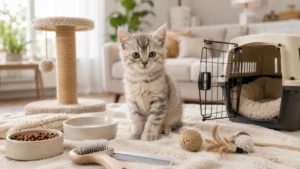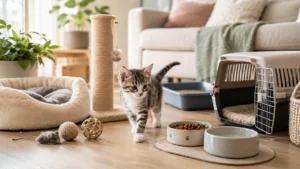
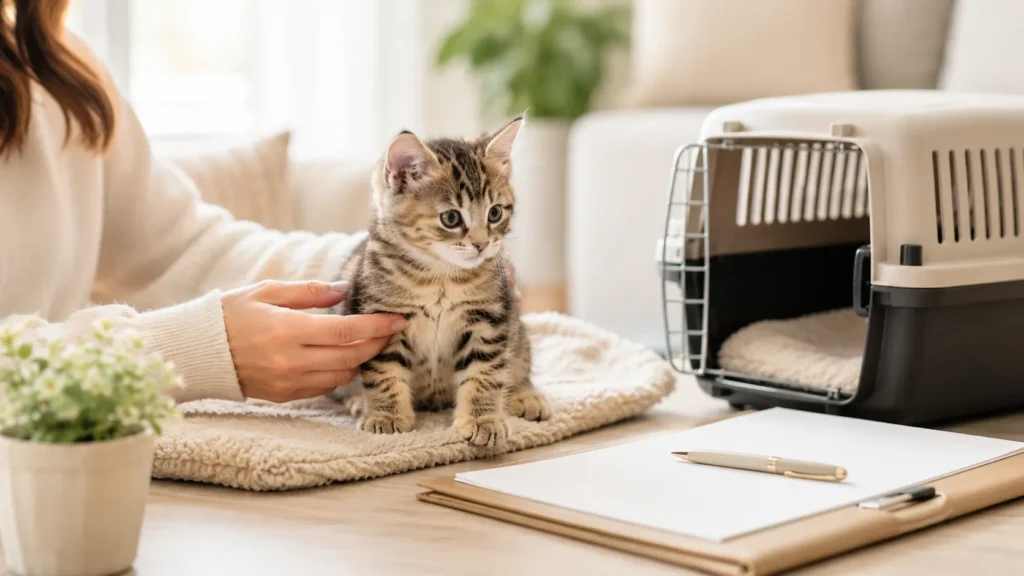
Reserving a kitten is an exciting decision, but it should never be rushed. A responsible breeder does much more than offer attractive photographs and a reservation form. They should be able to explain how the kittens are raised, what health care they receive, how they are socialised, and what support is available before and after the kitten joins your home.
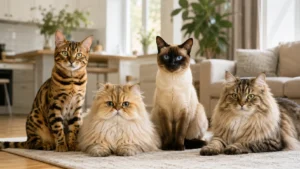
Whether you are searching for a Bengal, Persian, Siamese, Siberian, or another pedigree breed, asking the right questions can help you avoid disappointment and make a more informed decision.
A kitten may become part of your family for many years. Taking time to evaluate the breeder, understand the reservation process, and review all available information is an important part of responsible ownership.
This guide covers the most important questions to ask before reserving a kitten from a breeder in Europe.
Why Choosing the Right Breeder Matters
The breeder you choose can influence your kitten’s early health, confidence, behaviour, and ability to adjust to family life.
The first weeks of a kitten’s life are extremely important. During this period, kittens learn from their mother, interact with littermates, become familiar with people, and begin adapting to normal household sounds and routines.
A responsible breeder should prioritise:
- The health and welfare of every cat
- Appropriate veterinary care
- Safe and clean living conditions
- Careful socialisation
- Honest communication
- Suitable homes for each kitten
- Clear reservation and collection procedures
- Support for new owners
A trustworthy breeder should welcome thoughtful questions. They should understand that responsible families need enough information before making a financial and emotional commitment.
What Breed Is Best for My Lifestyle?
Before discussing a specific kitten, ask the breeder whether the breed is suitable for your lifestyle and home.
Different breeds have different needs.
Bengal cats are often energetic, intelligent, and highly active. Persian cats are generally calmer but require regular coat care. Siamese cats are social, expressive, and often vocal. Siberian cats are playful, affectionate, and usually need consistent grooming.
A breeder should be able to explain:
- The breed’s general temperament
- Expected activity level
- Grooming requirements
- Social needs
- Common behavioural characteristics
- Suitability for children
- Compatibility with other pets
- The amount of daily attention required
Be honest about your routine. Tell the breeder whether you live in an apartment or house, have children, own other pets, work long hours, or travel frequently.
A responsible breeder should help you decide whether the breed is genuinely suitable rather than simply encouraging an immediate reservation.
Can I Learn About the Kitten’s Parents?
Ask for information about the kitten’s mother and father.
The parents can provide useful insight into the kitten’s expected appearance, size, personality, coat type, and general characteristics.
You may ask:
- What are the parents’ names?
- What are their temperaments?
- Are photographs or videos available?
- Can the mother be seen with the kittens?
- What are the parents’ ages?
- Have they had any previous litters?
- Are they registered, where applicable?
- What health information is available?
The mother should normally be present with the litter during the kittens’ early development. She plays an important role in feeding, socialisation, and teaching appropriate feline behaviour.
If a breeder cannot provide any meaningful information about the parents, ask for a clear explanation.
How Is the Kitten Being Raised?
A kitten’s early environment can affect how confidently it adjusts to a new home.
Ask whether the kitten is being raised inside a home, in a dedicated breeding area, or in another type of environment.
You should understand whether the kitten is familiar with:
- Regular human interaction
- Household sounds
- Gentle handling
- Grooming
- Litter trays
- Scratching posts
- Toys and play
- Other cats
- Children, when applicable
- Calm dogs, when applicable
- Everyday routines
Kittens raised with appropriate care and positive experiences are often better prepared for family life.
The breeder should be able to describe a typical day and explain how the kittens are handled, fed, cleaned, supervised, and introduced to new experiences.
How Is the Kitten Socialised?
Socialisation is one of the most important subjects to discuss.
Good socialisation does not mean forcing kittens to interact constantly. It means giving them safe, age-appropriate, and positive experiences.
Ask the breeder:
- How often are the kittens handled?
- Are they comfortable around different people?
- Are they familiar with common household noises?
- Have they been introduced to grooming?
- Do they play with littermates?
- Are they confident when exploring?
- Have they shown signs of unusual fearfulness?
- How does the breeder respond to shy behaviour?
A well-socialised kitten may still need time to settle into a new home, but early positive experiences can support confidence and adaptability.
What Is the Kitten’s Current Personality?
Breed characteristics are useful, but every kitten is an individual.
Ask the breeder to describe the kitten’s personality honestly.
The kitten may be:
- Confident and adventurous
- Calm and observant
- Playful and energetic
- Affectionate and people-oriented
- Independent
- Vocal
- Gentle
- Shy at first
- Highly curious
A good breeder spends enough time with the kittens to recognise differences in personality.
This information can help match a kitten with the right household. A highly active kitten may be ideal for an experienced family that enjoys interactive play, while a quieter kitten may be better suited to a peaceful home.
Avoid choosing a kitten based only on colour, coat pattern, or photographs. Personality and lifestyle compatibility are equally important.
What Veterinary Care Has the Kitten Received?
Ask for clear details about the kitten’s health care.
The breeder should explain what veterinary attention has already been provided and what care will still be needed after collection.
Questions may include:
- Has the kitten been examined by a veterinarian?
- Has the kitten received vaccinations?
- Has parasite prevention been provided?
- Is a veterinary health record available?
- Has the kitten been microchipped?
- Are there any known health concerns?
- Has the kitten ever required treatment?
- What future veterinary care is recommended?
- When should the next appointment take place?
Do not accept vague statements such as “the kitten is healthy” without asking what health checks have actually been completed.
You should receive available documentation when the kitten joins your family.
Have the Parents Received Relevant Health Screening?
Some breeds may be associated with inherited health conditions. Responsible breeding may involve health screening, genetic testing, veterinary examinations, or other assessments relevant to the breed.
Ask the breeder what screening has been completed for the parents and whether documentation is available.
The appropriate screening can vary by breed, so ask for a clear explanation instead of relying on general promises.
Useful questions include:
- What health tests are recommended for this breed?
- Which tests have been completed?
- Were both parents assessed?
- Can the results be viewed?
- Has the breeder ever encountered inherited health concerns in previous litters?
- How are breeding decisions made?
A responsible breeder should be willing to discuss health openly. No breeder can guarantee that a cat will never develop a medical problem, but careful health planning is an important sign of responsible practice.
What Food Is the Kitten Eating?
Ask exactly what the kitten is currently eating.
You should know:
- The food brand
- The food type
- Portion sizes
- Feeding times
- Whether wet and dry food are used
- Whether the kitten has any dietary sensitivities
- Which treats are given
- Whether supplements are used
Sudden dietary changes can cause digestive discomfort, especially during the stress of moving to a new home.
It is usually sensible to continue the same food at first and introduce any new diet gradually.
Ask the breeder to provide written feeding instructions and enough information to purchase the correct food before collection.
Is the Kitten Using a Litter Tray?
Ask whether the kitten is consistently using a litter tray and what type of litter is currently used.
Continuing with a familiar litter during the first days may make the transition easier.
Ask about:
- The type of tray
- The litter material
- The tray’s location
- Cleaning frequency
- Any previous accidents
- Whether the kitten prefers an open or covered tray
Most kittens learn litter habits from their mother and environment, but moving to a new home can temporarily affect behaviour.
Prepare a quiet, accessible litter area before the kitten arrives.
Is the Kitten Comfortable with Grooming?
Grooming needs vary significantly between breeds.
Persian and Siberian kittens may require frequent brushing, while Bengal and Siamese kittens generally have lower coat-maintenance needs.
Ask whether the kitten has been introduced to:
- Brushing
- Nail handling
- Ear checks
- Face cleaning
- Eye-area cleaning
- Mouth inspection
- Bathing, when appropriate
- Hair drying, when appropriate
Early positive grooming experiences can make future care much easier.
The breeder should also be able to recommend suitable brushes, combs, nail clippers, and other grooming supplies for the breed.
At What Age Can the Kitten Leave?
Ask when the kitten will be ready to leave the breeder.
A kitten should not be separated from its mother and littermates too early. The appropriate collection age depends on development, health, breed, veterinary care, and the breeder’s programme.
The breeder should explain why the proposed collection date is suitable.
Before leaving, the kitten should ideally be:
- Eating independently
- Using the litter tray
- Growing appropriately
- Socially ready
- Comfortable away from the mother for normal periods
- Assessed according to the breeder’s veterinary-care plan
- Prepared for the transition to a new home
Be cautious if a very young kitten is offered for immediate collection without a clear explanation.
What Is Included with the Kitten?
Ask for a complete list of what will be provided.
Depending on the breeder and reservation agreement, this may include:
- Veterinary records
- Vaccination information
- Microchip details
- Pedigree or registration documents
- Feeding instructions
- Care guidance
- A sales or adoption agreement
- A familiar blanket
- A small amount of current food
- Grooming information
- A kitten pack
- Ongoing breeder support
Do not assume that any particular item is included. Ask for everything in writing before making a payment.
Is There a Written Reservation Agreement?
A professional reservation process should be clear and documented.
Ask whether the breeder provides a written reservation agreement or contract.
The agreement should explain:
- The kitten being reserved
- The agreed price
- The deposit amount
- The remaining balance
- Payment deadlines
- What the deposit covers
- Whether the deposit is refundable
- What happens if the buyer changes their mind
- What happens if the kitten cannot be released
- The expected collection or delivery arrangements
- The documents included
- Any owner responsibilities
Read every term carefully before paying.
Do not rely only on informal messages, verbal promises, or social-media conversations.
How Does the Deposit Process Work?
Ask for full details before sending a deposit.
Important questions include:
- How much is the deposit?
- When is it due?
- Is it refundable?
- Which payment methods are accepted?
- Will a receipt be provided?
- When is the final balance due?
- Are there additional costs?
- Can the payment recipient be verified?
- What happens if the kitten becomes unavailable?
A deposit should never be sent simply because someone is creating urgency.
Take time to review the information, confirm the breeder’s identity, and understand all conditions.
A responsible breeder should not pressure you to make an immediate payment without giving you a reasonable opportunity to ask questions.
Can I See Recent Photos or Videos?
Ask for recent, clear photographs or videos of the kitten.
The breeder may also be able to arrange a live video call or an in-person visit, depending on location and their visitor policy.
Recent visual information can help you:
- Observe the kitten’s movement
- See the living environment
- Confirm the kitten’s appearance
- View interaction with littermates
- Observe the mother
- Ask questions in real time
- Develop confidence in the process
Photographs alone cannot confirm every detail, but current videos and transparent communication can provide helpful context.
Be cautious when the same photographs appear on multiple unrelated websites or when the breeder repeatedly avoids providing recent material.
Can I Visit the Breeder?
Ask whether visits are possible and what conditions apply.
Some breeders may restrict visits to protect young kittens from stress or infectious illness. Others may allow scheduled visits after certain health milestones.
A restricted visitor policy is not automatically a warning sign, but the breeder should provide a clear and reasonable explanation.
When visits are not possible, ask whether alternatives are available, such as:
- A live video call
- Recent videos
- A virtual introduction
- A scheduled collection appointment
- Additional documentation
- References or reviews
The goal is to understand how the breeder demonstrates transparency while protecting the cats’ welfare.
What Are the Collection or Delivery Options?
Ask exactly how the kitten will reach your home.
Depending on your location, the breeder may offer:
- Collection from the breeder
- A scheduled meeting location
- Personal delivery
- Specialist pet transport
- Another agreed travel arrangement
Discuss:
- Travel duration
- Carrier requirements
- Responsibility during transport
- Food and water arrangements
- Rest breaks
- Required documents
- Delivery fees
- Handover procedures
- What happens if travel is delayed
The kitten’s safety and comfort should always be the priority.
Avoid arrangements in which the process is unclear or the breeder cannot explain who will transport the kitten.
What Documents Will Be Provided?
Ask for a written list of all documents included.
These may include:
- A purchase or transfer agreement
- Veterinary records
- Vaccination documentation
- Microchip information
- Pedigree documentation
- Registration information
- Feeding instructions
- Health-care guidance
- Transport documentation, where necessary
- Payment receipts
Review the spelling of names, identification numbers, dates, and other details when the documents are received.
Store all records safely and take veterinary documents to the kitten’s first appointment.
What Support Is Available After Collection?
A responsible breeder’s involvement should not necessarily end when the kitten leaves.
Ask what support is available during the settling-in period.
The breeder may be able to help with:
- Feeding questions
- Grooming advice
- Litter-tray concerns
- Introducing other pets
- Normal adjustment behaviour
- Breed-specific care
- Product recommendations
- General transition guidance
The breeder should not replace a veterinarian, but ongoing communication can be helpful during the first few days.
Ask how to contact them and what response times are normally expected.
What Happens If My Circumstances Change?
Although nobody plans to give up a new pet, responsible owners should consider long-term possibilities.
Ask whether the breeder has a policy for situations in which an owner can no longer care for the cat.
Some breeders may require the owner to contact them before rehoming the cat. Others may offer guidance or assistance.
Understanding this policy demonstrates that both the breeder and buyer are thinking about the kitten’s lifelong welfare.
How Can I Verify the Breeder?
Before reserving, take reasonable steps to verify the breeder and business.
You may review:
- The breeder’s website
- Contact information
- Business details
- Reviews
- Social-media history
- Recent kitten updates
- Policies and contracts
- Payment information
- Communication consistency
- References, when available
Look for clear and consistent information.
A professional website alone does not guarantee responsible breeding, but transparency across multiple areas is a positive sign.
Be cautious when information changes frequently, the breeder refuses normal questions, or the communication focuses only on receiving payment.
What Warning Signs Should I Watch For?
Potential warning signs may include:
- Pressure to pay immediately
- Unusually low prices without explanation
- Refusal to provide recent photos or videos
- No information about the kitten’s parents
- No veterinary records
- No written agreement
- Confusing or changing payment details
- Multiple breeds always available in very large numbers
- Kittens offered at an unusually young age
- Poor communication about health
- Refusal to answer basic care questions
- Inconsistent names, locations, or contact details
- Requests for unusual or difficult-to-trace payments
One concern may have a reasonable explanation, but several warning signs should not be ignored.
Trustworthy breeders generally prefer careful, responsible buyers and will not object to sensible verification.
Questions the Breeder May Ask You
A responsible breeder may also ask questions about your home and experience.
They may want to know:
- Whether you have owned cats before
- Who lives in the household
- Whether you have children
- Whether you have other pets
- How long the cat may be alone
- Whether you rent or own your home
- Whether pets are allowed
- How you plan to manage grooming
- Whether the cat will live indoors
- What you expect from the breed
These questions are not necessarily intrusive. They can show that the breeder wants to place each kitten in a suitable and stable home.
Be honest. Accurate information helps the breeder recommend the right kitten.
Prepare Your Own Checklist
Before contacting a breeder, create a checklist so you do not forget important questions.
Your checklist may include:
- Breed suitability
- Parent information
- Health screening
- Veterinary care
- Socialisation
- Personality
- Food
- Grooming
- Litter habits
- Collection age
- Contract terms
- Deposit conditions
- Documents
- Travel arrangements
- Aftercare support
Keep copies of messages, receipts, agreements, and documents.
A clear record protects both the buyer and breeder and reduces the risk of misunderstandings.
Final Thoughts
Reserving a kitten should be a thoughtful and transparent process.
The right breeder should be willing to discuss the kitten’s health, personality, parents, socialisation, feeding, grooming, veterinary care, and readiness to leave. They should also provide clear information about deposits, contracts, collection, documentation, and ongoing support.
Do not choose a kitten based only on appearance or availability. Consider whether the breed and individual personality are suitable for your home, schedule, experience, and expectations.
Take time to ask questions, review documents, verify important details, and understand the full commitment.
At Elite Cat Breeders, families can explore Bengal, Persian, Siamese, and Siberian kittens while receiving guidance throughout the selection and reservation process. Careful preparation and clear communication can help create a positive beginning for both the kitten and its new family.